
Japanese Female Diarist and Poet during Heian Court
Lee Jay Walker
Modern Tokyo Times
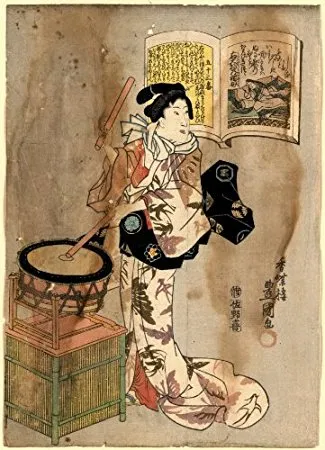
The Japanese diarist and waka poet Michitsuna no Haha (935–995) occupies a unique place in the cultural and literary world of the Heian court. Although her personal name has been lost to history, her literary voice has endured through Kagerō Nikki (The Gossamer Years), a work that transcends the intimate details of one woman’s life to illuminate the emotional, cultural, and spiritual landscape of tenth-century Japan. Her diary, filled with moments of truth, sorrow, and quiet resilience, offers an invaluable glimpse into the realities faced by aristocratic women in an age celebrated for its artistic refinement.
Beyond its personal narrative, Kagerō Nikki reveals the profound spiritual fabric of Heian society. During periods of overwhelming grief and emotional turmoil, Michitsuna no Haha repeatedly contemplated withdrawing from court life to become a Buddhist nun. Such reflections demonstrate the immense cultural authority of Buddhism, which, alongside Shintoism, shaped the moral and spiritual consciousness of the age. Religious devotion was not merely ceremonial but offered a genuine path toward inner peace and liberation from worldly suffering. In this respect, Heian Japan shared much with contemporary Christian Europe, where faith likewise provided meaning amid the uncertainties of life — a striking contrast with the far more secular outlook that characterizes much of modern society.
Some readers dismiss Kagerō Nikki as narrowly personal, yet such criticism overlooks its broader cultural significance. Through her deeply emotional reflections, Michitsuna no Haha quietly challenges the social conventions of the Heian court. Her relationship with the powerful Fujiwara no Kaneie, the father of her son, exposes the unequal gender dynamics embedded within aristocratic society, where political influence and romantic relationships were often inseparable. Yet her diary is not merely an account of despair; it is equally a testament to dignity, endurance, and emotional strength.
This resilience is perhaps best illustrated in the affection she extends to Kaneie’s adopted daughter during the final years of their relationship. To care deeply for another child despite Kaneie’s repeated infidelities reflects remarkable compassion and maturity. Her humanity stands in sharp contrast to the shallow courtly values that frequently reduced women to instruments of status and desire. Through her experiences, readers gain a deeper appreciation of how women of the Heian court negotiated systems of male authority while preserving their own emotional integrity, artistic expression, and personal identity.
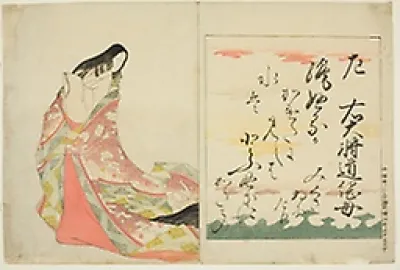
Her profound grief following the death of her mother remains among the most moving passages in classical Japanese literature. In Edward Seidensticker’s translation, she writes: “Early in the autumn, my mother died. I had managed somehow to hold myself together while she was alive, but my wretchedness now was something few people know. I of all the family had been most attached to her, and I had hoped and prayed that I should not survive her. Now she was dead. For a time it seemed that my prayer would be answered – I quite lost control of my arms and legs, and felt that I must even stop breathing.”
This passage reveals the emotional intensity that lies at the heart of Kagerō Nikki. Her devotion to her mother, her son, and Kaneie’s adopted daughter ultimately eclipses the influence of Kaneie himself. Although their relationship initially held promise, he never occupied the deepest reaches of her heart. Instead, her emotional world was sustained by family, friendship, and the rich literary culture of the Heian court, where women exchanged poetry and cultivated bonds that endured despite the constraints imposed upon them.
Consequently, the loneliness that permeates Kagerō Nikki should not be understood simply as the isolation of women within a patriarchal society. Rather, Michitsuna no Haha suggests that genuine emotional fulfilment belonged not to those who wielded political or social power, but to those capable of cultivating sincere human relationships. In this sense, the seemingly powerful may have been the loneliest of all.
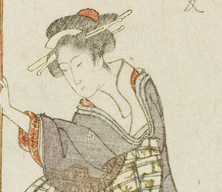
Overall, while Kagerō Nikki cannot provide a complete portrait of Heian society, it remains one of its most revealing cultural treasures. It captures the refinement of court life, the centrality of poetry, the enduring influence of Buddhism and Shintoism, and the emotional complexities experienced by aristocratic women. Far from embodying passive submission, Michitsuna no Haha emerges as a perceptive observer whose literary legacy quietly challenges simplistic assumptions about female compliance in classical Japan. More than a millennium later, her voice continues to illuminate the cultural sophistication, spiritual depth, and emotional richness of the Heian age.
https://moderntokyonews.com/category/japan-culture/ Past JAPAN CULTURE articles via MODERN TOKYO NEWS
MODERN TOKYO TIMES – MODERN TOKYO NEWS – please check https://moderntokyonews.com
Please check Modern Tokyo News at https://moderntokyonews.com for articles going back over 12 years. Sadly, Modern Tokyo Times got hacked and lost 14 years of articles…

Modern Tokyo News is part of the Modern Tokyo Times group
http://moderntokyotimes.com Modern Tokyo Times – International News and Japan News
http://sawakoart.com – Sawako Utsumi’s website and Modern Tokyo Times artist
https://moderntokyonews.com Modern Tokyo News – Tokyo News and International News
PLEASE JOIN ON TWITTER
https://twitter.com/MTT_News Modern Tokyo Times
PLEASE JOIN ON FACEBOOK
https://www.facebook.com/moderntokyotimes