
Lebanon and Hezbollah: State Within A State (Iran Proxy)
Kanako Mita, Sawako Utsumi, and Lee Jay Walker
Modern Tokyo Times
Several years ago, Lebanon convulsed as vast crowds surged through its streets — an uprising that cut across sect, class, and creed. This was no ordinary protest wave; it was a national rupture. Citizens denounced not only economic freefall and political paralysis, but an entrenched system of cronyism that has long fed off division while suffocating the possibility of renewal. The cry was unmistakable: a rejection of a sectarian order that has hollowed out the state and betrayed its people.
These structural fractures have been relentlessly magnified by demographic and economic strain. Decades of displacement — from Palestinians still awaiting resolution to the immense influx of Syrians fleeing war — have placed extraordinary pressure on a state already teetering on collapse.
The result is a society pushed to its limits, where disillusionment now transcends religious identity. Across communities, many Lebanese no longer see a viable future within a system that cannot reform itself — and within a reality where Hezbollah operates as a parallel power, its compass often fixed not on Beirut, but on Tehran.
Hezbollah remains one of the most formidable and paradoxical actors in the region: a hybrid entity —militia, political party, religious movement, and welfare network — deeply embedded in Lebanese society. Yet its trajectory continues to bind Lebanon to conflicts not of its choosing concerning Iran and its anti-Israeli policy. Despite sustaining severe blows from Israel, including the 2024 killing of Hassan Nasrallah and other senior figures, the organization has not fundamentally altered its strategic alignment. Instead, it persists in tethering Lebanon’s fate to Iran’s regional ambitions — exposing the country, once again, to the specter of war.
To reduce Hezbollah to a caricature is to misunderstand it. Unlike Sunni extremist movements defined by rigid exclusion and indiscriminate hostility, Hezbollah has demonstrated tactical pragmatism. In Syria, its forces played a role in shielding vulnerable minorities, including Christian communities, during some of the conflict’s darkest chapters. Within Lebanon, it navigates the fragile mosaic of sectarian politics, maintaining relationships across religious divides. This complexity, however, does not absolve the central contradiction at its core concerning Iran.
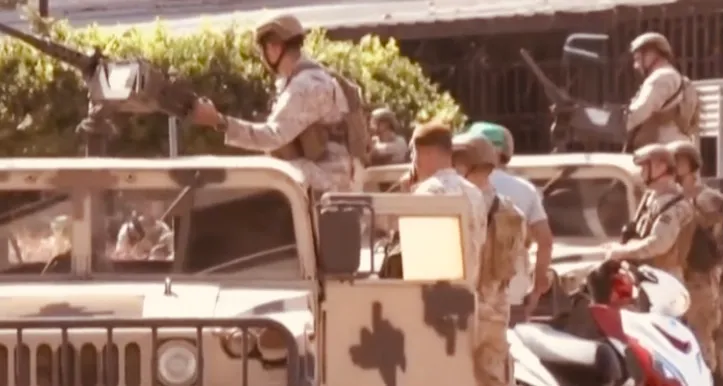
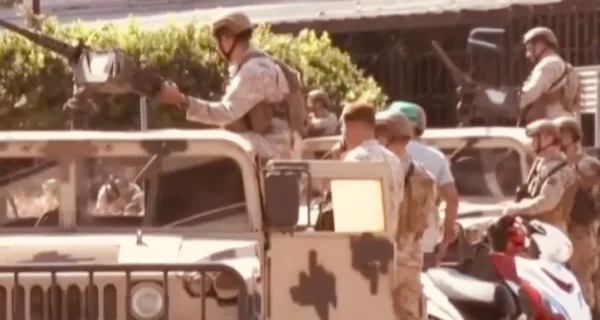
For all its integration into Lebanon’s political fabric, Hezbollah’s overriding loyalty to Iran’s strategic calculus continues to imperil the Lebanese state. Its independent military capacity — operating beyond full governmental control — undermines sovereignty at its foundation. The Lebanese Armed Forces, constrained and politically encumbered, reflect a state unable — or unwilling — to assert a monopoly on force. What emerges is a nation caught in suspension: neither fully sovereign nor fully collapsed, but dangerously exposed.
As tensions between the United States and Israel on one side and Iran on the other intensify, Lebanon once more stands on the fault line of a broader confrontation. Its sovereignty remains conditional, compromised by the enduring reality of a “state within a state.” This is not merely a political dilemma — it is an existential one. A nation cannot endure indefinitely while a powerful armed actor pursues parallel strategic objectives tied to an external power.
Lebanon’s survival demands a reckoning. A sustainable future requires confronting the armed dimension of Hezbollah and forging a durable political accommodation with Israel — one that removes the perpetual trigger of conflict. Without such steps, Lebanon will remain trapped in a cycle where every regional escalation risks igniting domestic catastrophe.
Already battered by economic collapse, institutional decay, and mass emigration, Lebanon cannot absorb further shocks. Its small population and intricate religious tapestry demand restraint, consensus, and a shared national vision. No single faction can be permitted to drag the country into war on behalf of external ambitions. Sovereignty must be reclaimed — not in rhetoric, but in reality.
The choice before Hezbollah is historic and unavoidable: to fully integrate within the Lebanese state and help salvage a nation on the brink, or to persist along a path that deepens fragmentation and invites perpetual conflict. Without recalibration, the consequences are stark — an accelerating brain drain, recurring upheavals tied to Iran, and the steady erosion of what remains of Lebanese statehood.
Lebanon stands at the edge. Whether it steps back — or is pushed forward —will define not only its future, but the fate of an entire generation.
https://moderntokyonews.com/category/middle-east-west-asia Past articles about WEST ASIA (MIDDLE EAST) via MODERN TOKYO NEWS
MODERN TOKYO TIMES – MODERN TOKYO NEWS – please check https://moderntokyonews.com
Please check Modern Tokyo News at https://moderntokyonews.com for articles going back over 12 years. Sadly, Modern Tokyo Times got hacked and lost 14 years of articles…

Modern Tokyo News is part of the Modern Tokyo Times group
http://moderntokyotimes.com Modern Tokyo Times – International News and Japan News
http://sawakoart.com – Sawako Utsumi’s website and Modern Tokyo Times artist
https://moderntokyonews.com Modern Tokyo News – Tokyo News and International News
PLEASE JOIN ON TWITTER
https://twitter.com/MTT_News Modern Tokyo Times
https://www.facebook.com/moderntokyotimes/ Facebook