
Japanese Art and Culture
Lee Jay Walker
Modern Tokyo Times
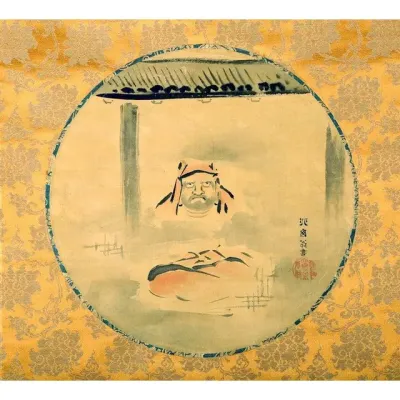
Hanabusa Itchō (1652–1724) emerged from the richly layered yet fiercely codified world of the Edo Period as an artist of uncommon independence and restless imagination. In an age when artistic lineages guarded their traditions with near-sacred devotion, Itchō possessed the rare courage to step beyond inherited boundaries and pursue a vision uniquely his own.
He first entered the celebrated Kanō tradition under the guidance of Kanō Yasunobu. There, amid disciplined brushwork and ceremonial elegance, he acquired formidable technical mastery. The stately grandeur of Kanō painting shaped his early sensibilities, teaching him precision, balance, and compositional refinement. Yet beneath this formal training stirred a temperament unsuited to confinement. Even while absorbing the strict aesthetics of the school, Itchō’s spirit wandered toward poetry, humor, and the living rhythms of ordinary humanity.
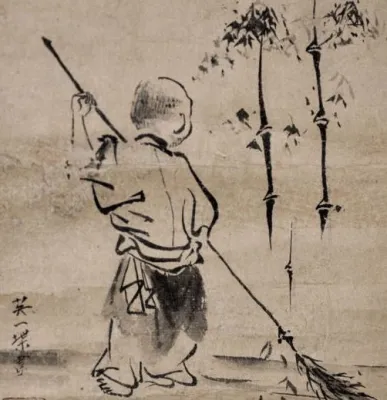
A profound influence arrived through the great haikai master Matsuo Bashō, whose poetic vision helped cultivate Itchō’s literary soul. Under Bashō’s influence, he developed a sensitivity attuned to fleeting beauty, quiet irony, and the bittersweet fragility of existence. The rustle of wind through reeds, the loneliness hidden within laughter, the passing shimmer of a transient moment—such subtleties entered both his poetry and painting. As a gifted calligrapher, Itchō allowed word and image to flow together with effortless grace, each brushstroke carrying the cadence of thought and emotion.
Yet the same independence that enriched his art also estranged him from orthodoxy. His irreverent wit and refusal to bow fully before convention led to his expulsion from the Kanō school. Freed from institutional restraint but cast into uncertainty, Itchō turned toward merchants, townspeople, and unconventional patrons whose tastes differed from the austere preferences of elite circles. In these new surroundings, his art gained greater vitality and humanity, often infused with satire, playful observation, and a quietly rebellious spirit.
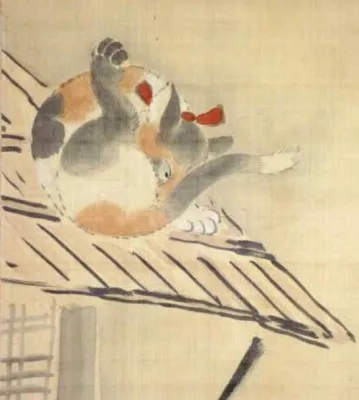
That defiance, however, carried a heavy price. His satirical temperament and willingness to mock authority eventually provoked punishment, leading to imprisonment and exile between 1698 and 1710. These years unfolded beneath the harsh shadow of isolation and hardship. Yet adversity did not extinguish his creativity; rather, it deepened it. Exile sharpened the reflective undercurrent of his work, lending his paintings and poetry a greater emotional resonance—an awareness of impermanence tempered by resilience.
Ultimately, Itchō’s life became a testament to artistic freedom in an era deeply bound by hierarchy and ritual. He refused to surrender entirely to convention—whether in painting, poetry, or the conduct of his own life. His verse carries the voice of a wandering spirit unwilling to be confined, while his paintings reveal an artist continually testing the boundaries of style, subject, and expression. Even behind prison walls and across the long distances of exile, Hanabusa Itchō remained devoted to the pursuit of beauty and imagination, transforming personal suffering into a quiet yet enduring form of innovation.
https://moderntokyonews.com/?s=Art Past ART articles via MODERN TOKYO NEWS (Modern Tokyo Times group)
MODERN TOKYO TIMES – MODERN TOKYO NEWS – please check https://moderntokyonews.com
Please check Modern Tokyo News at https://moderntokyonews.com for articles going back over 12 years. Sadly, Modern Tokyo Times got hacked and lost 14 years of articles…

Modern Tokyo News is part of the Modern Tokyo Times group
http://moderntokyotimes.com Modern Tokyo Times – International News and Japan News
http://sawakoart.com – Sawako Utsumi’s website and Modern Tokyo Times artist
https://moderntokyonews.com Modern Tokyo News – Tokyo News and International News
PLEASE JOIN ON TWITTER
https://twitter.com/MTT_News Modern Tokyo Times
PLEASE JOIN ON FACEBOOK
https://www.facebook.com/moderntokyotimes