
West Papua: The Geopolitical Silence Surrounding an Indigenous People (Indonesia)
Kanako Mita, Sawako Utsumi, and Lee Jay Walker
Modern Tokyo Times
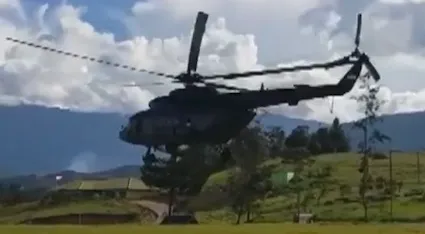
Oppression in West Papua continues, decade after decade, while the international community repeatedly demonstrates the limits of its commitment to human rights when strategic interests are involved. The contradiction is increasingly difficult to ignore. Australia and Japan are deeply concerned with the war in Ukraine and European security, partly through their broader strategic alignment with the United States. Yet the continuing suffering of indigenous Papuans receives considerably less political attention. For West Papuans, this creates an uncomfortable question: why does the international commitment to human rights appear so much stronger when it coincides with wider geopolitical interests?
Human Rights Monitor has previously documented the persistence of violence in West Papua, including allegations of torture, extrajudicial killings and enforced disappearances. It also highlighted concerns regarding impunity, particularly when alleged perpetrators belonged to the police or military. According to its assessment, internal disciplinary mechanisms frequently lacked the transparency and independence necessary to provide genuine accountability. Such concerns matter because the issue is not simply one of isolated abuses. Rather, they point toward a prolonged political and security crisis in which civilian communities remain caught between Indonesian security forces and the armed West Papua National Liberation Army.
The humanitarian consequences are profound. Indigenous Papuans have experienced displacement in areas including Intan Jaya, Maybrat, Nduga, Pegunungan Bintang and Yahukimo amid continuing armed conflict. UN human-rights experts have previously raised grave concerns over alleged extrajudicial killings, enforced disappearances, torture, inhuman treatment and the forced displacement of thousands of indigenous Papuans. They also expressed alarm over allegations that humanitarian assistance was obstructed and that church workers were prevented from reaching displaced communities. Such allegations deserve sustained international scrutiny rather than episodic attention.
The role of the churches is particularly important. Christianity forms a central component of indigenous Papuan identity in many communities, and allegations concerning interference with churches and church workers therefore carry significance beyond individual incidents. When humanitarian workers or religious personnel are prevented from reaching displaced civilians, the consequences extend into the moral and social fabric of communities already traumatised by conflict.
The deeper geopolitical problem is that Indonesia remains an important regional power. Its strategic position in Southeast Asia, enormous population, natural resources, maritime geography and growing economic significance make it an important partner for America, Australia, Japan, France, Britain, China, India, Malaysia, Singapore and others. Consequently, governments have powerful incentives to maintain constructive relations with Jakarta. This reality does not automatically make those governments complicit in human-rights abuses, but it does raise a serious question about whether economic and strategic considerations have contributed to an international reluctance to confront Indonesia more forcefully over West Papua.
Japan provides a particularly revealing example. Tokyo has expanded economic and strategic relations with Indonesia while simultaneously presenting itself internationally as a defender of a rules-based international order and human rights. Japan’s foreign policy has placed considerable emphasis on concerns surrounding China, Russia and the security architecture of the Indo-Pacific. Yet West Papua rarely occupies a comparable position in Japanese political discourse. This discrepancy deserves examination.
The same contradiction applies to Australia. Canberra regards Indonesia as an indispensable regional partner and has substantial strategic reasons for maintaining a stable relationship with Jakarta. Yet West Papua lies immediately beyond Australia’s northern neighbourhood. The continuing conflict therefore represents not a distant humanitarian issue but a regional question involving Melanesian identity, migration, security, maritime stability, indigenous rights and the credibility of Australia’s commitment to human rights in the Pacific.
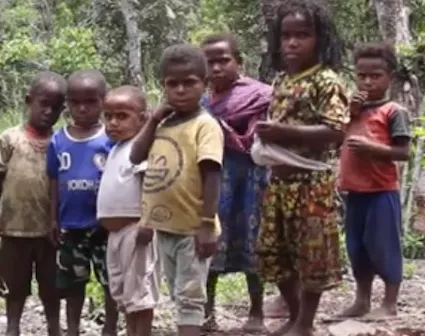
The history is also highly contentious. Indonesia took control of West New Guinea in the 1960s, while the 1969 Act of Free Choice remains deeply disputed by West Papuan representatives and human-rights advocates. The United Nations General Assembly subsequently adopted Resolution 2504, taking note of the Secretary-General’s report concerning the process. The historical legitimacy of that process continues to be challenged because only a limited number of representatives participated under Indonesian supervision rather than through a universal one-person-one-vote referendum.
This history cannot simply be separated from the present. The controversy surrounding the political incorporation of West Papua remains part of the foundation upon which today’s conflict rests. Estimates of the number of Papuans killed since Indonesian control began vary substantially, with figures around 500,000 frequently cited by human-rights groups, West Papuan representatives and international reporting. The Guardian, for example, has reported this estimate while documenting allegations of decades of military and police abuses.
Nor can demographics and natural resources be ignored. Indigenous Papuans have long expressed fears concerning migration, land acquisition and the erosion of their political and cultural position. Critics of Indonesian policy describe these processes in terms of Javanization and Islamization, although these terms should be used carefully because Indonesia itself is religiously and ethnically diverse. The central political issue is whether indigenous Papuans are being progressively marginalised economically, politically and demographically within their ancestral homeland.
Natural resources add another layer to the equation. West Papua possesses extraordinary mineral, forest and energy wealth, including gold, copper, natural gas, timber and other resources. The region’s economic value inevitably creates competing interests between Jakarta, corporations, local communities and international investors. Consequently, the question of indigenous rights cannot be separated from the question of who controls land and who benefits from the resources beneath it.
This is where the international political economy becomes uncomfortable. Major powers can condemn human-rights violations in one part of the world while maintaining lucrative strategic, economic and military relationships with states accused of serious abuses elsewhere. America, France, Britain, Australia and Japan have extensive interests in Indonesia, while China, India, Malaysia, Singapore and other states likewise have important economic relationships with Jakarta.
Military cooperation illustrates the contradiction particularly clearly. In 2022, the United States approved a possible Foreign Military Sale to Indonesia involving F-15ID aircraft and related equipment estimated at $13.9 billion. The announcement itself demonstrates the strategic importance Washington attaches to its relationship with Jakarta. Yet the strengthening of military relations also raises legitimate questions concerning how international partners should incorporate human-rights safeguards and accountability into security cooperation.
The international community therefore faces a credibility problem. Human rights cannot become a selective instrument applied primarily to states that are geopolitical competitors while being treated as a secondary consideration when a government is an important economic, diplomatic or strategic partner. If the rules-based international order means anything, its principles must possess some consistency.
This does not mean ignoring abuses committed by armed Papuan groups. Civilians must be protected regardless of who commits violence, and attacks against Indonesian personnel or civilians cannot be justified. Nor does criticism of Indonesian policy require hostility toward the Indonesian people. The issue is fundamentally political: the protection of indigenous communities, accountability for alleged abuses, humanitarian access, political freedoms and the right of Papuans to have their grievances heard.
For this reason, greater regional engagement is essential. Fiji, Papua New Guinea, Samoa, Solomon Islands, Vanuatu, New Caledonia and other Pacific actors have a particular historical and cultural connection to the wider Melanesian question. New Zealand also possesses an important regional role. Rather than leaving the issue primarily to Jakarta and distant Western capitals, Pacific governments should continue pressing for greater humanitarian access, independent monitoring and meaningful political dialogue.
Australia’s position deserves particular scrutiny. East Timor — now Timor-Leste — demonstrated that regional political realities can eventually change when international pressure, local resistance and geopolitical circumstances converge. West Papua is obviously a different historical and legal situation, and the comparison should not be treated as identical. Nevertheless, the Timor-Leste experience demonstrates that questions once considered too sensitive for international diplomacy can eventually become unavoidable.
Ultimately, West Papua is not simply a story about Indonesia. It is a test of the international system itself.
If powerful governments genuinely believe that indigenous rights, humanitarian protection, political accountability and self-determination matter, those principles cannot be confined to conflicts where they serve immediate strategic interests. The people of West Papua should not have to compete with great-power rivalries for international attention.
Papuan civilization, culture, history, identity and religious traditions deserve protection. So too do the forests, mountains and natural resources upon which generations of indigenous communities have depended.
The choice confronting the international community is therefore increasingly stark: continue treating West Papua as a peripheral issue because Indonesia is strategically important, or acknowledge that a rules-based international order must also apply when defending human rights is politically inconvenient.
Overall, the Papuan people are overwhelmingly Christian and ethnically Melanesian — distinct from the Javanese elite that dominates Indonesia’s largely Muslim state. Yet for decades the international community has looked away while Papuans are massacred, their villages militarised, their culture marginalised, and their ancestral lands handed over to corporations. This is colonialism in plain sight.
For decades, the world has heard the concerns of West Papuans. The greater question now is whether it is finally prepared to listen.
Paradise Bombed – Video documenting the hidden West Papua (Important video to watch about West Papua)
https://www.ipwp.org The International Parliamentarians for West Papua (IPWP)
https://moderntokyonews.com/?s=west+papua Past articles about WEST PAPAU via MODERN TOKYO NEWS
MODERN TOKYO TIMES – MODERN TOKYO NEWS – please check https://moderntokyonews.com
Please check Modern Tokyo News at https://moderntokyonews.com for articles going back over 12 years. Sadly, Modern Tokyo Times got hacked and lost 14 years of articles…

Modern Tokyo News is part of the Modern Tokyo Times group
http://moderntokyotimes.com Modern Tokyo Times – International News and Japan News
http://sawakoart.com – Sawako Utsumi’s website and Modern Tokyo Times artist
https://moderntokyonews.com Modern Tokyo News – Tokyo News and International News
PLEASE JOIN ON FACEBOOK
http://facebook.com/moderntokyotimes