Yukio Mishima – The Last Great Japanese Writer
Lee Jay Walker
Modern Tokyo Times

Japan witnessed ever-shifting sands following the Meiji Restoration — an era shaped by modernity and nostalgia, liberalism and nationalism, Westernization and a yearning to reclaim an older soul. These forces did not move in harmony; they collided, not only in the political arena but within the very psyche of the nation. The catastrophe of World War II would further rupture Japan’s identity, recasting its image abroad and opening the door for United States influence to seep deeply into its cultural consciousness—for both renewal and erosion.
It is within this crucible that the genius of Yukio Mishima emerges. His literature does not merely narrate; it wrestles with the contradictions of a society suspended between opportunity and amnesia. Mishima saw, with piercing clarity, a modern Japan advancing at speed while quietly discarding the spiritual and philosophical inheritance that once anchored it.
In Sun and Steel, Mishima reflects: “Was I ignorant, then, when I was seventeen? I think not. I knew everything. A quarter-century’s experience of life since then has added nothing to what I knew. The one difference is that at seventeen I had no ‘realism’.”
Taken beyond its immediate context, these words resonate with a broader national allegory. They suggest a paradox: that knowledge may precede experience, yet become dulled by the compromises of “realism.” In this light, modern Japan — its skyline pierced by steel and glass—may be seen as possessing knowledge long ago, yet gradually surrendering its philosophical vitality to material ascent.
When Japan awoke in the nineteenth century, it confronted a world dominated by empires — Ottoman Empire expansion tied to Islamization, Spanish Empire and Catholic evangelism entwined with conquest, and the cold pragmatism of the British Empire, which often subdued not only lands but the spirit of its own internal underclasses. Exploitation, cultural erosion, and psychological domination formed the architecture of power. Japan absorbed this reality swiftly — and, in time, reflected aspects of it back into the world, even as it struggled to retain its own essence.
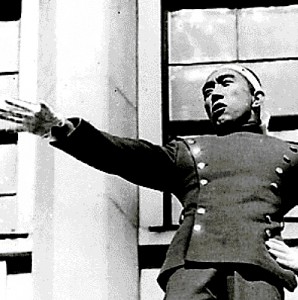
Mishima perceived this transformation with mounting unease. To him, modernity risked becoming an annihilating force — one that reduced culture to utility and tradition to ornament. In response, he increasingly turned against the supremacy of language itself, seeing in “words” a potential weakness when severed from action and embodiment.
He declared: “If we value so highly the dignity of life, how can we not also value the dignity of death? No death may be called futile.”
Here, Mishima confronts a modern sensibility that often clings to life while stripping it of transcendence. In invoking the dignity of death, he challenges a society that, in his view, risks drifting into a purposeless existence — one detached from history, sacrifice, and higher ideals.
In The Temple of the Golden Pavilion, he writes: “The past does not only draw us back to the past. There are certain memories of the past that have strong steel springs and, when we who live in the present touch them, they are suddenly stretched taut and then they propel us into the future.”
This vision is neither nostalgic nor regressive. Rather, it asserts that the past, when truly understood, is kinetic — it propels rather than restrains. For Mishima, a nation severed from its past cannot meaningfully advance; it can only drift, mistaking motion for progress.
His critique sharpens further: “A samurai is a total human being, whereas a man who is completely absorbed in his technical skill has degenerated into a ‘function’, one cog in a machine.”

In this, Mishima condemns the reduction of human identity to specialization and productivity — a hallmark of advanced industrial societies. The “total human being,” rooted in discipline, culture, and spirit, is replaced by the fragmented modern individual, defined by utility alone.
Mishima’s later years embodied these convictions. As explored in Sun and Steel, he sought to fuse intellect with physicality, word with action — transforming himself into a living critique of the age he inhabited. Rejecting the introspective fragility of Confessions of a Mask, he moved toward an ideal of strength that echoed the philosophical shadow of Friedrich Nietzsche and the concept of the Übermensch.
In the end, Mishima stood apart—not merely from his contemporaries, but from the trajectory of modernity itself. Writers such as Haruki Murakami, Kenzaburo Oe, and Banana Yoshimoto, for all their merit, inhabit a different psychological landscape — one shaped by the normalization of the very modernity Mishima resisted.
Thus, Mishima’s life and death cannot be disentangled from the convulsions he chronicled. He was not merely observing Japan’s transformation — he was confronting it, embodying its tensions, and ultimately rejecting its conclusions. In doing so, he achieved a rare and unsettling freedom: liberation not only from the strictures of his age, but from the quiet erosion of the soul that he believed defined it.
In comparison, Mishima remains singular — a writer whose literature, philosophy, and final act converge into a statement so potent that it continues to challenge, unsettle, and provoke. His voice endures not as an echo of the past, but as a question posed to the future: what is gained when a nation advances, if in doing so it forgets the essence of what it once was?

http://moderntokyotimes.com Modern Tokyo Times – International News and Japan News
http://sawakoart.com – Sawako Utsumi and her website – Modern Tokyo Times artist
https://moderntokyonews.com Modern Tokyo News – Tokyo News and International News
PLEASE JOIN ON TWITTER
https://twitter.com/MTT_News Modern Tokyo Times
PLEASE JOIN ON FACEBOOK