

DRC Ebola Deaths Continue to Grow (Over 1,800 Deaths)
Kanako Mita, Sawako Utsumi, and Chika Mori
Modern Tokyo Times
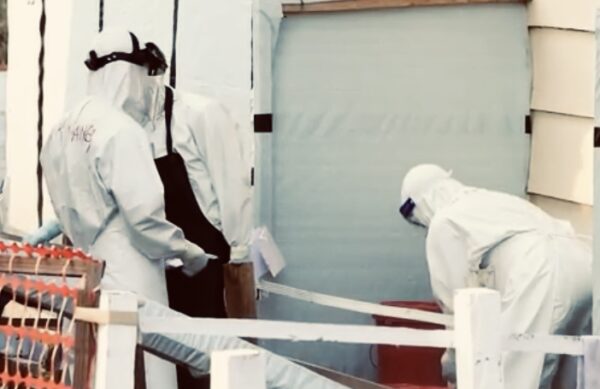
The Democratic Republic of the Congo (DRC) remains trapped in a cycle of ethnic, political, and religious violence that has devastated its eastern provinces for decades. Amid relentless conflict, one of the deadliest Ebola outbreaks in modern history has claimed more than 1,800 lives, with little indication that the epidemic is nearing containment. At the same time, tensions with neighboring Rwanda remain acute amid persistent allegations that Kigali continues to support the Tutsi-led M23 insurgency against the Congolese state.
While the worsening Ebola epidemic has drawn international attention, another crisis is unfolding behind the headlines. Healthcare workers battling the deadly virus are increasingly protesting unpaid wages and inadequate compensation, threatening to undermine the already fragile response.
As AP News reports: “The health workers, including nurses providing critical care to Ebola patients, said they haven’t received wages and bonuses for their work fighting Ebola since the outbreak was declared in mid-May in one of Congo’s most remote and vulnerable areas ravaged by rebel conflict.”
Accordingly, healthcare workers in Bunia, in Ebola-ravaged Ituri Province — which accounts for roughly 90% of all confirmed Ebola cases—have again staged strikes over unpaid salaries. Their action mirrors growing unrest among other essential workers struggling to survive despite serving on the front lines of one of Africa’s gravest health emergencies.
France 24 likewise reports: “In Ituri province, the epicentre of the outbreak, families said many frontline workers have gone on strike, worsening access to healthcare that was already challenged by rebel conflict in one of DR Congo’s most remote and vulnerable areas.”
Food insecurity compounds the catastrophe. The World Food Programme (WFP) warns: “More than 2.65 million people in the 48 Ebola-affected health zones face acute food insecurity (IPC Phase 3+), including more than 628,000 people in emergency conditions (IPC Phase 4).”
The WFP further notes: “In eastern DRC, nearly 10 million people are already facing crisis or emergency levels of hunger. Ituri remains one of the country’s most severe hunger hotspots with 1.9 million people facing crisis levels of food insecurity or worse.”
Against this bleak backdrop, a labyrinth of armed militias, entrenched ethnic rivalries, and regional power struggles continues to fuel instability. The Islamist Allied Democratic Forces (ADF) persist in their campaign of terror against Christian communities and other civilians, leaving massacres, displacement, and shattered communities in their wake. Millions have fled their homes as conflict, hunger, disease, and extreme poverty tighten their grip on an exhausted population.
Lee Jay Walker, a Modern Tokyo Times analyst, says: “Regional African nations and the wider international community must not remain idle while millions suffer in silence. The beleaguered people of this vast and wounded nation—and countless others trapped in neglected crises across Africa—deserve more than sympathy; they need decisive action and sustained support before hope itself fades into oblivion.”
Beyond Ebola, eastern Congo is confronting a cascade of deadly diseases, including cholera, malaria, measles, Mpox, tuberculosis, and numerous other infectious illnesses. Widespread malnutrition further weakens already vulnerable communities, making preventable diseases even more lethal. Hunger and disease have become inseparable, reinforcing one another in a vicious cycle that deepens with each passing week while much of the world looks elsewhere.
Oxfam starkly observes that the DRC “…has been engulfed in a complex humanitarian crisis for decades. Over the last two years, the situation has massively deteriorated due to an increase in the scale and number of conflicts in the country.”
The Ebola epidemic continues to intensify in the hardest-hit regions, where around 80% of recent infections stem from unknown chains of transmission. This severely complicates containment efforts and heightens fears that the virus could spread even more rapidly.
Without sustained regional cooperation, stronger international engagement, and a significant expansion of humanitarian assistance, millions of Congolese risk being abandoned to the convergence of war, epidemic disease, hunger, and despair. The DRC is no longer confronting isolated crises—it is enduring a humanitarian catastrophe in which conflict, public health, and food insecurity reinforce one another with devastating consequences.
https://moderntokyonews.com/?s=DRC Past DRC articles via MODERN TOKYO NEWS
MODERN TOKYO TIMES – MODERN TOKYO NEWS – please check https://moderntokyonews.com
Please check Modern Tokyo News at https://moderntokyonews.com for articles going back over 12 years. Sadly, Modern Tokyo Times got hacked and lost 14 years of articles…

Modern Tokyo News is part of the Modern Tokyo Times group
http://moderntokyotimes.com Modern Tokyo Times – International News and Japan News
http://sawakoart.com – Sawako Utsumi and her website – Modern Tokyo Times artist
https://moderntokyonews.com Modern Tokyo News – Tokyo News and International News
PLEASE JOIN ON TWITTER
https://twitter.com/MTT_News Modern Tokyo Times
PLEASE JOIN ON FACEBOOK
http://facebook.com/moderntokyotimes