
Egypt Warns Against a Parallel Government in Sudan (Regional Rivalries)
Boutros Hussein, Noriko Watanabe, and Lee Jay Walker
Modern Tokyo Times
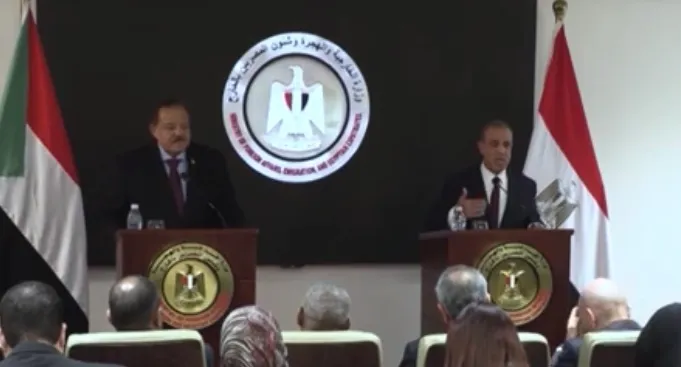
President Abdel Fattah el-Sisi of Egypt firmly opposes any internal or regional attempt to establish a parallel government in Sudan. For Cairo, the issue extends far beyond Sudanese politics: the emergence of competing governments and rival power structures could accelerate the fragmentation of another strategically vital Arab and African state, echoing the disastrous experience of Libya.
Egypt therefore rejects the political ambitions of Mohamed Hamdan Dagalo, the paramilitary chief of the Rapid Support Forces (RSF), and opposes any country that facilitates the creation of a parallel authority in Sudan. In 2026, Cairo continues to reiterate its support for Sudan’s territorial integrity, sovereignty and existing state institutions.
The warning carries considerable geopolitical weight. Sudan occupies a pivotal position between North Africa and the Horn of Africa, possesses a strategically important Red Sea coastline, and borders Egypt, Libya, Chad, the Central African Republic, South Sudan and Ethiopia. Its fragmentation would therefore not necessarily remain a domestic Sudanese affair. It could alter the regional balance of power across several already unstable theatres.
The International Crisis Group captures the danger, stating: “With the world’s attention fixed on the U.S.-Israeli war with Iran, another conflict is raging in the Horn of Africa, not that far away. The Sudanese civil war is grinding on with no resolution in sight.” The organisation warns that the prolonged struggle between the Sudanese Armed Forces and RSF has increased the risk of long-term partition, with both sides having named governments claiming nationwide sovereignty.
Egypt’s position is consequently rooted in a broader doctrine of state preservation. Egyptian Foreign Minister Badr Abdelatty stated last year: “Sudan’s territorial integrity is a red line for Egypt… (Egypt) rejects any calls to establish alternative structures outside the current framework.”
Saudi Arabia has expressed a similar concern, with its Foreign Ministry warning against “any steps or illegal measure taken outside the framework of official institutions.” Kuwait, Jordan and Qatar have likewise voiced support for Sudan’s sovereignty and territorial integrity.
Yet Sudan’s tragedy is unfolding within an increasingly competitive geopolitical environment.
The International Crisis Group stresses this dimension, noting that Sudan’s war has developed amid “a scramble for influence in the Horn of Africa.” Sudan’s Red Sea coastline and geographical position make it strategically important to external powers seeking influence between the Horn, North Africa and the wider Middle East. Consequently, financial and military support for Sudan’s rival factions risks transforming the conflict into a proxy struggle involving competing regional agendas.
This is precisely where Egypt’s concerns become wider than Sudan itself.
Cairo already faces a serious strategic dispute with Ethiopia over the Grand Ethiopian Renaissance Dam and the Nile waters. To Egypt, Sudan is not simply a neighbouring country but part of the wider security architecture surrounding the Nile basin. At the same time, the instability of Libya to the west, turbulence across the Sahel, insecurity around the Red Sea and Gulf of Aden, and continuing conflicts in Yemen all contribute to an increasingly difficult strategic environment.
The possibility of another fragmented state emerging along Egypt’s southern frontier would therefore present Cairo with profound security, economic and demographic risks. Prolonged instability could intensify refugee movements, disrupt trade and agriculture, facilitate arms trafficking and provide greater operating space for extremist organisations and transnational criminal networks.
The Red Sea dimension is equally important. Sudan sits opposite the Arabian Peninsula and close to one of the world’s most strategically sensitive maritime corridors. Conflict extending along the coastline could intersect with wider instability involving Yemen, attacks on commercial shipping and the struggle for influence around the Red Sea and Horn of Africa.
The Sudanese military-led government has also accused political actors in Kenya of advancing the interests of the United Arab Emirates (UAE), reflecting the increasingly internationalised nature of the conflict. Such accusations underline a central reality: Sudan’s war is no longer insulated from regional competition.
The International Crisis Group similarly warns that foreign capitals are seeking to influence Sudan’s future, turning the conflict into “a stage for indirect competition among foreign capitals with overlapping or clashing agendas.”
That geopolitical contest makes the creation of rival governments particularly dangerous. Once competing authorities become entrenched, partition can acquire political, military and economic momentum. Libya demonstrates how rival institutions can survive for years, producing a fractured state in which sovereignty becomes contested and external powers acquire greater leverage.
Sudan is already experiencing immense human suffering. UN News reports: “Sudan has been embroiled in a conflict between the RSF and the Sudanese Armed Forces since April 2023. The war has displaced millions and left parts of the country plagued by famine and critical shortages of lifesaving aid.”
The Independent reports that millions of refugees have fled to neighbouring Chad, Ethiopia and South Sudan, while more than 24 million people — approximately half of Sudan’s population — face acute food insecurity.
Behind the geopolitical calculations are therefore millions of ordinary Sudanese people confronting displacement, hunger and uncertainty.
The central question is whether Sudan can remain one sovereign state or whether continued warfare and competing external interests will gradually institutionalise fragmentation.
For Egypt, the answer is unequivocal. A divided Sudan would not merely represent another political crisis; it could become a new fault line connecting the Nile basin, North Africa, the Horn of Africa and the Red Sea.
Sudan needs peace, functioning institutions and a credible political settlement — not competing governments that risk permanently weakening the nation-state.
For a region already surrounded by fractured states and competing geopolitical ambitions, preserving Sudan’s territorial integrity is therefore not simply a diplomatic preference. It is increasingly a question of regional security.
https://moderntokyonews.com/category/africa Past AFRICA articles via MODERN TOKYO NEWS
MODERN TOKYO TIMES – MODERN TOKYO NEWS – please check https://moderntokyonews.com
Please check Modern Tokyo News at https://moderntokyonews.com for articles going back over 12 years. Sadly, Modern Tokyo Times got hacked and lost 14 years of articles…

Modern Tokyo News is part of the Modern Tokyo Times group
http://moderntokyotimes.com Modern Tokyo Times – International News and Japan News
http://sawakoart.com – Sawako Utsumi and her website – Modern Tokyo Times artist
https://moderntokyonews.com Modern Tokyo News – Tokyo News and International News
PLEASE JOIN ON TWITTER
https://twitter.com/MTT_News Modern Tokyo Times
PLEASE JOIN ON FACEBOOK
http://facebook.com/moderntokyotimes