
Taiwan, China and the Dangerous Geometry of Deterrence: Statecraft Is Needed
Kanako Mita, Sawako Utsumi, and Lee Jay Walker
Modern Tokyo Times
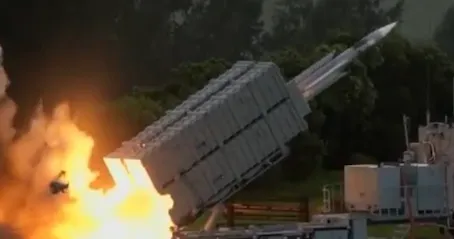
The Taiwan Strait is entering an increasingly consequential phase of geopolitical competition, in which military deterrence, strategic ambiguity, economic interdependence and great-power rivalry are becoming inseparably intertwined.
President Lai Ching-te has announced a US$40 billion special supplementary defense budget designed to accelerate Taiwan’s military modernization and strengthen its ability to withstand a worst-case scenario involving the People’s Republic of China. The proposed spending includes advanced air-defense capabilities, including what Lai has termed “Taiwan Dome”—a multilayered system intended to improve detection and interception of incoming threats. Taipei has also committed itself to substantially increasing defense expenditure, with the longer-term objective of reaching 5 percent of GDP.
The strategic logic is understandable. Taiwan faces a much larger military power across the Taiwan Strait, while Beijing has continued military exercises, maritime pressure and other forms of gray-zone activity around the island. Indeed, Taiwan’s government argues that these developments require a stronger capacity for deterrence and societal resilience.
Yet deterrence presents a profound paradox. The stronger Taiwan becomes militarily, the more difficult it may become for Beijing to interpret those developments as purely defensive; conversely, the greater China’s military pressure becomes, the stronger the argument within Taiwan for further rearmament. Thus emerges the classic security dilemma: measures intended by one side to increase security can be interpreted by the other as evidence of an increasingly hostile strategic environment.
The scale of American military support illustrates this dilemma.
In December 2025, the Trump administration announced an arms package for Taiwan worth approximately $11.15 billion, according to Taiwan’s Defense Ministry. The package included 82 HIMARS launch systems and 420 ATACMS missiles, together valued at more than $4 billion; 60 self-propelled howitzers and associated equipment worth more than $4 billion; drones exceeding $1 billion; and Javelin and TOW missiles worth more than $700 million.
These weapons undoubtedly strengthen Taiwan’s military options. But they also demonstrate how the Taiwan question has become embedded within the wider strategic competition between Washington and Beijing. The comparison with weapons supplied to Ukraine is particularly significant because it highlights how modern warfare has transformed the strategic importance of precision missiles, drones, mobile artillery, air defense and dispersed military capabilities.
Washington’s bipartisan support for Taiwan’s defense is therefore unlikely to disappear simply because political control of the White House changes. The underlying strategic calculation transcends individual administrations: the United States regards the preservation of stability in the Taiwan Strait as an important component of the wider Indo-Pacific balance.
But this is precisely where statecraft must accompany deterrence.
America simultaneously seeks to constrain China’s strategic ambitions while encouraging Taiwan to strengthen its military capabilities. From Washington’s perspective, these policies are intended to prevent coercion and preserve the regional balance. From Beijing’s perspective, however, the same developments can appear to constitute a steadily expanding containment architecture involving the United States and its regional partners.
This perception cannot simply be dismissed.
The emergence of AUKUS, the Quad and increasingly integrated U.S.-Japan-Philippines security cooperation has transformed the strategic environment surrounding China. Beijing consequently sees Taiwan not merely through the prism of cross-Strait relations but also through the wider lens of American power projection in the Indo-Pacific.
That does not justify coercion against Taiwan. Nor does it mean that Taiwan should sacrifice its security. It does, however, demonstrate why diplomacy cannot be treated as an afterthought.
STATECRAFT NEEDED
China and Taiwan have coexisted for decades while developing extraordinarily deep economic and societal connections. Their relationship has never been merely military. Trade, investment, families, cultural exchanges and economic interdependence created channels of interaction even during periods of severe political disagreement.
That history should not be discarded.
Beijing would serve its own long-term interests by creating greater political and international space for Taiwan rather than relying principally upon pressure and coercion. Persistent military intimidation risks producing precisely the opposite strategic outcome from that which Beijing desires: it strengthens arguments within Taiwan for greater military preparedness while simultaneously encouraging Washington, Tokyo and other regional capitals to deepen security cooperation.
Coercion can therefore become strategically counterproductive.
Likewise, Taiwan’s political leadership must recognize that every action carries consequences beyond the island itself. Taipei has legitimate reasons to strengthen its defenses, particularly given the military imbalance across the Strait. But strategic restraint, careful language and sustained communication with Beijing remain essential components of national security.
The objective should not be to demonstrate who can speak the loudest. Instead, the objective should be to prevent war.
This requires Beijing to understand that intimidation cannot produce durable political accommodation, while Taipei must understand that unnecessarily provocative rhetoric can narrow diplomatic space. Washington, meanwhile, carries an enormous responsibility: supporting Taiwan’s ability to defend itself while simultaneously ensuring that deterrence does not become indistinguishable from permanent confrontation.
The same principle applies to the wider Indo-Pacific.
Japan, the Philippines, the United States, Australia and other regional actors have legitimate security concerns. Yet an expanding network of military partnerships can produce an increasingly rigid geopolitical architecture in which every defensive measure is interpreted as offensive preparation by another power.
This is how strategic miscalculation begins.
Lai has warned that “China’s threats to Taiwan and the Indo-Pacific region are escalating,” pointing to military activity, maritime gray-zone operations and disinformation campaigns affecting Taiwan and neighboring countries.
Such concerns deserve to be taken seriously. But the diplomatic response should not end with another weapons purchase.
Deterrence without dialogue is incomplete statecraft.
Taiwan needs sufficient military strength to make coercion extraordinarily costly. China needs sufficient confidence to understand that peaceful coexistence does not require perpetual intimidation. America needs to preserve deterrence while keeping diplomatic channels open to Beijing. And the wider Indo-Pacific needs mechanisms capable of preventing military encounters, accidents and misunderstandings from escalating into a catastrophe.
There is also a profound lesson from the tragedy of Ukraine. Accordingly, once diplomatic space collapses and military planning begins to dominate national decision-making, reversing the trajectory becomes extraordinarily difficult. The Taiwan Strait must not reach that point.
Hence, The alternative is not weakness. It is strategic maturity.
Taiwan should strengthen its defenses while preserving diplomatic space. China should reduce coercive pressure while addressing its legitimate security concerns through political engagement rather than intimidation. Washington should continue supporting regional stability while ensuring that strategic competition does not become an irreversible march toward confrontation.
Ultimately, neither China nor Taiwan can afford to mistake military preparedness for political resolution. Hence, the most sophisticated weapon system cannot substitute for diplomacy. Therefore, the greatest victory for China, Taiwan, the United States and the wider Indo-Pacific would therefore not be the successful prosecution of a war, but the successful prevention of one.
The Taiwan Strait does require deterrence (similar to all important geopolitical regions) — but above all, it requires statecraft.
https://moderntokyonews.com/?s=China Past CHINA articles via MODERN TOKYO NEWS
MODERN TOKYO TIMES – MODERN TOKYO NEWS – please check https://moderntokyonews.com
Please check Modern Tokyo News at https://moderntokyonews.com for articles going back over 12 years. Sadly, Modern Tokyo Times got hacked and lost 14 years of articles…

Modern Tokyo News is part of the Modern Tokyo Times group
http://moderntokyotimes.com Modern Tokyo Times – International News and Japan News
http://sawakoart.com – Sawako Utsumi’s website and Modern Tokyo Times artist
https://moderntokyonews.com Modern Tokyo News – Tokyo News and International News
PLEASE JOIN ON TWITTER
https://twitter.com/MTT_News Modern Tokyo Times
PLEASE JOIN ON FACEBOOK
https://www.facebook.com/moderntokyotimes