
Japanese Art and the Flow of Beauty – Birds, Landscapes, and Lotus
Lee Jay Walker
Modern Tokyo Times
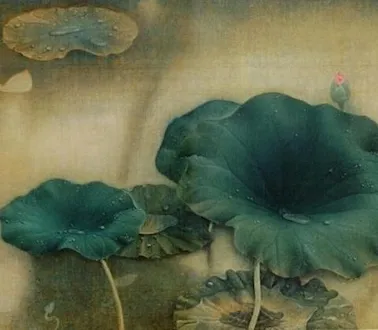
Tokuoka Shinsen (1896–1972) emerged from the cultural landscape of Kyoto, a city where history, spirituality, and beauty have long existed in intimate conversation. Kyoto’s temple precincts, ancient gardens, seasonal landscapes, and refined traditions of painting and craftsmanship formed part of the wider cultural atmosphere in which his artistic spirit developed. Beyond Kyoto, the sacred heights of Kōyasan, the ancient temples of Nara, and the surrounding sanctuaries of Japanese high culture belonged to a broader world of Buddhist devotion, classical aesthetics, and reverence for nature.
Such surroundings offer an important window into the cultural atmosphere behind Shinsen’s art. In Japan, landscape has rarely been merely geographical. Mountains can possess a spiritual presence, temples can embody centuries of memory, while changing seasons can become expressions of impermanence and renewal. Within this rich cultural inheritance, Shinsen developed an artistic language that could absorb both tradition and the changing realities of modern Japan.
The Hiroshima Museum of Art says, “A Japanese-style painter in Kyoto circle, and active as one of the representative pupils of Seiho Takeuchi during and after World War II. After creating the originally realistic style affected by the western-realism, he opened a new style in Japan, driving the simplification and decorativeness rooted in Japanese classicism.”

Here lies an important tension within Shinsen’s artistic world: the meeting of Western realism with the decorative and spiritual inheritance of Japanese classicism. Rather than simply choosing between old and new, his work reflects a broader Japanese artistic conversation—one in which foreign techniques could be encountered, absorbed, transformed, and ultimately brought into dialogue with an older cultural vocabulary.
Suzuki Shōnen, born in the 1840s during the final years of the Edo Period and passing away in 1918 as the Taishō era was beginning, belonged to a generation that witnessed extraordinary cultural transformation. His life stretched from the closing chapter of the Tokugawa world into the Meiji Period (1868–1912) and beyond, when Japan experienced profound political, social, technological, and artistic change.
Yet artistic inheritance remained powerful. Guided from an early age by his father, Suzuki Hyakunen, Shōnen received more than technical instruction. He entered a living tradition in which artistic knowledge was transmitted through generations, schools, teachers, observation, discipline, and an intimate understanding of materials and subjects. The cultural environment of Kyoto therefore remained an essential backdrop to his development, while the sacred landscapes of Kōyasan and Nara, together with the long historical dialogue between Japan and China, belonged to the wider cultural universe surrounding Japanese art.
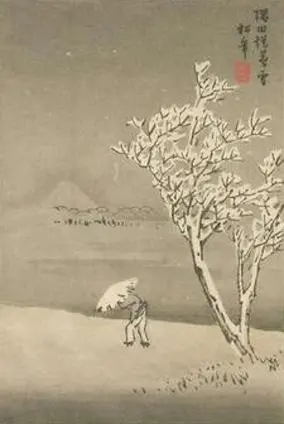
The Metropolitan Museum of Art says, “Together with his father, Suzuki Hyakunen, Shonen was one of the leading painters active in Kyoto during the Meiji period…”
Shōnen consequently stands at a fascinating cultural crossroads. His life belonged to an era when Japan was rapidly modernising, yet Kyoto continued to preserve deep connections with classical painting, Buddhism, seasonal aesthetics, and the accumulated memory of centuries. His art reminds us that modernity did not simply erase tradition. Instead, the two could exist together—sometimes harmoniously, sometimes in tension, but continually shaping the direction of Japanese artistic expression.
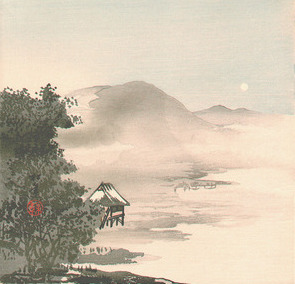
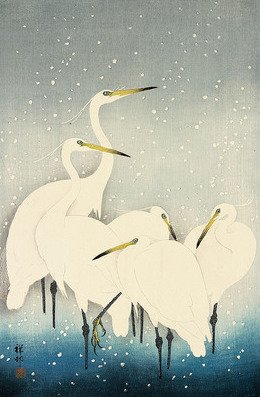
For Ohara Koson (1877–1945), the natural world became a universe of extraordinary richness. He is particularly celebrated for his kachō-ga—literally, images of birds and flowers—a tradition deeply rooted in the Japanese appreciation of nature and the changing seasons. Yet within these apparently simple subjects exists an entire world of observation, atmosphere, movement, colour, and silence.
Birds, flowers, insects, trees, grasses, the sea, distant skylines, sunlight, moonlight, snow, rain, and the subtle transformations of the seasons could all become worthy subjects. Koson’s achievement was not merely to reproduce nature, but to distil something of its character. A bird resting upon a branch, a flower bending beneath seasonal change, or an animal appearing against an expansive landscape can become a meditation upon beauty and impermanence.
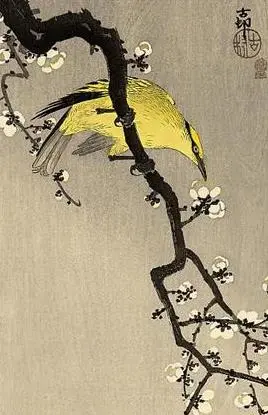
This is one reason kachō-ga occupies such an important place within Japanese art. Nature is not necessarily presented as something separate from humanity. Instead, the human world and natural world continually converse. The changing seasons become a language; flowers suggest transience; birds carry movement across the sky; the moon creates an atmosphere of quiet contemplation.
Across the work of Tokuoka Shinsen, Suzuki Shōnen, and Ohara Koson, therefore, one encounters different generations and different artistic personalities, yet also a remarkable cultural continuity. Kyoto’s classical inheritance, the sacred landscapes of Japan, the influence of Chinese civilisation, the encounter with Western artistic ideas, and the enduring Japanese sensitivity toward nature all form parts of a much larger artistic conversation.
Centuries change. Artistic styles change. Yet the conversation between humanity, nature, beauty, and the sacred continues.
https://moderntokyonews.com/?s=Art Past articles about ART via MODERN TOKYO NEWS (Modern Tokyo Times group)
MODERN TOKYO TIMES – MODERN TOKYO NEWS – please check https://moderntokyonews.com
Please check Modern Tokyo News at https://moderntokyonews.com for articles going back over 12 years. Sadly, Modern Tokyo Times got hacked and lost 14 years of articles…

Modern Tokyo News is part of the Modern Tokyo Times group
http://moderntokyotimes.com Modern Tokyo Times – International News and Japan News
http://sawakoart.com – Sawako Utsumi’s website and Modern Tokyo Times artist
https://moderntokyonews.com Modern Tokyo News – Tokyo News and International News
PLEASE JOIN ON FACEBOOK
http://facebook.com/moderntokyotimes