
Dominican Republic Supports El Salvador Actions in Haiti
Kanako Mita, Sawako Utsumi, and Lee Jay Walker
Modern Tokyo Times

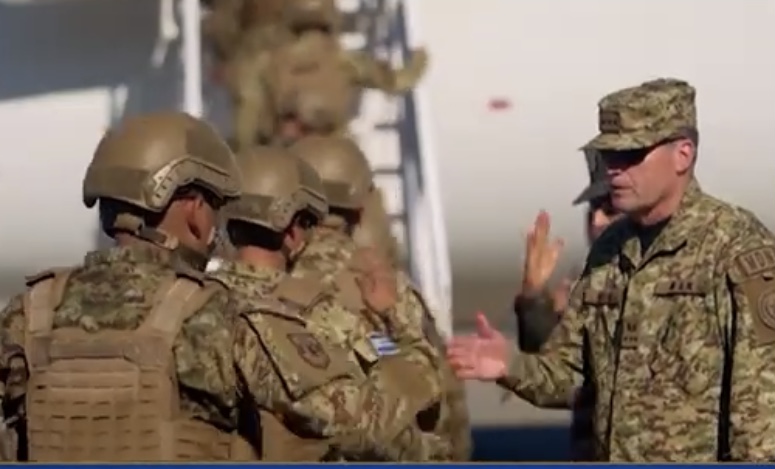
President Nayib Bukele of El Salvador initially deployed approximately 2,000 soldiers to Haiti following the kidnapping of four Salvadoran aviation technicians serving within the UN-backed Gang Suppression Force (GSF). However, subsequent reporting by the Associated Press places the Salvadoran deployment at approximately 2,500 troops, indicating that the operation has expanded since its initial phase. Bukele, admired at home for suppressing criminal networks and restoring order to many of El Salvador’s streets, is adamant that the fight must be taken directly to the criminals who are running amok and operating beyond the effective reach of the GSF.
President Luis Abinader of the Dominican Republic acknowledged that his government is working with El Salvador across several important areas. Having previously strengthened border security with Haiti to prevent criminality from spilling into the Dominican Republic, Abinader is supporting El Salvador through intelligence and logistical cooperation.
Some criticism has emerged over El Salvador operating beyond the established remit of the GSF. However, Abinader made it abundantly clear that the Dominican Republic supports Bukele’s approach. He stated that the GSF must coordinate with Salvadoran security forces and “decisively support the Salvadoran military and the attitude of President Bukele.”
The Associated Press reports: “The Dominican Republic shares the island of Hispaniola with Haiti. Abinader has pledged to keep monitoring the shared border via drones, soldiers and armored vehicles and respond to any actions that might threaten the stability of his country.”
The GSF has also stressed the importance of cooperation in confronting the criminal networks blighting Haiti. Its spokesperson, Igor Rugwiza, clarified that coordination is ongoing “in support of shared security objectives.” He added: “The (force) considers effective coordination and deconfliction among all security actors operating in Haiti to be essential to achieving sustainable security outcomes.”
Nevertheless, El Salvador is demonstrating a determination to take the fight directly to major criminal networks rather than allow them to dictate the pace and geographical spread of ensuing disorder.
The Independent reports: “Salvadoran President Nayib Bukele recently celebrated an attack carried out by Haitian police and Salvadoran troops that destroyed the home of Wilson Joseph, best known as Lanmò San Jou and leader of the 400 Mawozo gang. He was not killed in Sunday’s attack.”
Abinader also informed the public that the defence ministers of the Dominican Republic and El Salvador remain in constant contact concerning the Haitian crisis. Meanwhile, Prime Minister Alix Didier Fils-Aimé is expected to visit El Salvador next week to discuss the future of the Salvadoran troop deployment and the objectives of the mission beyond its initial phase.
The BBC reports: “The multinational force has struggled to penetrate areas where gangs hold sway. More than 5,700 people were killed in gang-related violence in Haiti this year, the UN says, and armed gangs control much of the capital.”
Criminal gang violence and the absence of credible government institutions in Haiti are longstanding problems. However, the assassination of President Jovenel Moïse in 2021 accelerated the country’s political deterioration and further weakened an already fragile state. Since then, criminal organisations have expanded their territorial influence, while successive political failures have undermined the prospects of restoring stability.
Haiti today is more than a country in crisis: it is a society under relentless siege. Armed gangs have supplanted public institutions across extensive areas, while civilians face murder, kidnapping, extortion and sexual violence. Hunger and displacement compound the suffering, and the state’s authority continues to erode. Recent estimates indicate that nearly 1.5 million Haitians have been internally displaced, while gangs retain control over large portions of Port-au-Prince. The violence has also spread beyond the capital, threatening communities that had previously offered refuge to those fleeing insecurity.
United Nations-designated human rights expert William O’Neill has described conditions as “hell on earth” — a devastating phrase that remains painfully relevant to the reality endured by millions of Haitians.
Nevertheless, Bukele must remain acutely conscious of the dangers of mission creep that have blighted many nations when they become overstretched. The initial deployment has a clear and understandable objective: securing the safe return of the kidnapped Salvadoran technicians. However, military operations in environments dominated by fragmented criminal networks can rapidly develop into much broader security commitments. An initial rescue operation must not inadvertently become an open-ended engagement in Haiti’s complex internal conflict.
Accordingly, following the initial robust deployment, it would be in El Salvador’s interests to operate more extensively within the established GSF framework, while recognising that the GSF itself must substantially strengthen its effectiveness. Clearly defined objectives, responsibilities, command arrangements and operational limits are essential.
Haiti remains tense, although there is some initial hope that El Salvador’s intervention will help suppress major criminal networks. In the short term, the military approach is understandable. Yet, over the longer term, the country needs more than temporary military interventions. It requires a durable political and security framework capable of restoring state authority, protecting civilians and preventing criminal organisations from continuing to dictate the future of an entire nation.
It is equally essential that the wider international community supports Haiti’s recovery. However, this must be accompanied by an acknowledgement that El Salvador, the Dominican Republic, Colombia and other regional nations possess an important understanding of the realities on the ground. They are not simply external participants offering opinions from a distance. They face the consequences of regional instability through border insecurity, criminal networks, displacement and the wider erosion of public order. Their geographical proximity and direct experience give them an important role in shaping realistic policies.
Ultimately, Haiti’s future cannot be determined by military intervention alone, nor can it be secured through international declarations that fail to address the realities confronting people on the ground. Regional cooperation, credible Haitian political institutions and sustained international financial and practical support must work together. El Salvador’s intervention has brought renewed attention to the crisis, but the wider objective must be to help Haiti recover the authority, security and dignity that its people have been denied for far too long.
https://moderntokyonews.com/category/north-america/ Past NORTH AMERICA articles via MODERN TOKYO NEWS (Modern Tokyo Times group)
MODERN TOKYO TIMES – MODERN TOKYO NEWS – please check https://moderntokyonews.com
Please check Modern Tokyo News at https://moderntokyonews.com for articles going back over 12 years. Sadly, Modern Tokyo Times got hacked and lost 14 years of articles…

Modern Tokyo News is part of the Modern Tokyo Times group
http://moderntokyotimes.com Modern Tokyo Times – International News and Japan News
http://sawakoart.com – Sawako Utsumi and her website – Modern Tokyo Times artist
https://moderntokyonews.com Modern Tokyo News – Tokyo News and International News
PLEASE JOIN ON FACEBOOK
http://facebook.com/moderntokyotimes