
ANC Decline in South Africa Continues (Local Election)
Michiyo Tanabe, Noriko Watanabe, and Chika Mori
Modern Tokyo Times
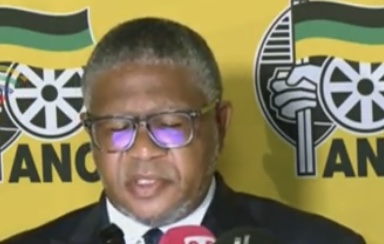
The African National Congress (ANC) in South Africa has suffered its worst-ever electoral result in the country’s democratic era. In the recent Local Government elections, the party barely reached 30%, obtaining just 30.76% of the national vote in 2026, compared with 45.59% in 2021. Hence, the ANC continues to lose support to a plethora of political parties, with important regional dynamics shaping the fortunes of opposition movements to varying degrees.
The Guardian reports: “Wednesday’s fragmented vote marks another stage in the decline of the ANC, which has led national governments since the end of white minority apartheid rule in 1994. High unemployment, crime, corruption and poor local service delivery have all contributed to voters turning away from the party.”
The results also highlight that the ANC obtained more than 50% of the vote in only one of the nine provinces. Five years ago, the party commanded outright majorities in six provinces. This decline is also reflected in the major metropolitan areas, where the ANC has lost considerable ground. Therefore, the electoral setback continues to rock a party increasingly marred by corruption scandals, growing disconnection from the electorate, and its failure to address fundamental issues related to poverty, jobs, immigration, housing, infrastructure and public services.
The BBC reports: “The Democratic Alliance (DA) came second in the overall vote with 24.64%, retaining majority control of the city of Cape Town. Former president Jacob Zuma’s MK party came third overall with 9.76%, unseating the ANC as winner in the city of Durban, while the Economic Freedom Fighters (EFF), led by Julius Malema, once seen as a serious challenge to the ANC, came fourth with 6.22%.”
President Cyril Ramaphosa (ANC) responded pointedly: “We accept the will of the people however concerning it might be, we accept that this is how the people of South Africa in our towns, in our cities, in our metros have spoken – and this is their verdict, we accept it with humility. It is a decline that is concerning, that is how I characterise it.”
Ironically, one positive aspect of the election is the democratic process itself. Voter turnout increased compared with the previous local elections. Moreover, the democratic process in South Africa demonstrates the importance of accepting electoral outcomes, particularly when political competition is becoming increasingly fragmented. Democratic legitimacy depends not simply on electoral victories but also on the willingness of political movements to respect the outcome.
Fikile Mbalula, the General Secretary of the ANC, acknowledged the party’s shortcomings, saying: “Where we have fallen short, this movement does not dispute it. Communities have gone without water. Refuse has not been collected. Roads have not been maintained… We have been weighed in the balance, and where we have been found wanting we dare not quarrel with the scale.”
The most serious established competitor to the ANC in recent years has been the DA. Yet, while its share of the vote increased from 21.83% in 2021 to 24.64% in 2026, it remains below the 26.9% it obtained in 2016. Hence, the DA has strengthened its position but has yet to demonstrate that it can translate this improvement into a sustained advance towards becoming South Africa’s largest political party. It retains an established electoral base, but the distance between it and the ANC remains considerable. Indeed, the DA’s inability to break through the 30% barrier across these three electoral contests provides an important counterbalance to predictions that the ANC’s political dominance is nearing an inevitable end.
Meanwhile, Jacob Zuma’s MK Party obtained 9.76%, adding another significant dimension to the ANC’s predicament. Its emergence demonstrates that opposition to the ANC is not confined to the DA or the EFF. However, much of MK’s electoral appeal, particularly in KwaZulu-Natal, comes from voters historically associated with the ANC’s traditional political constituency. This distinction is important when considering the longer-term prospects of the ANC. Although these voters currently support a rival movement, their historical political roots remain relevant. As Zuma’s personal influence inevitably recedes with age and the eventual transition in MK leadership, some of this electorate could return to the ANC, while others may remain with MK or gravitate towards different political movements. Therefore, the ANC’s electoral catchment may be considerably wider than its present voting figures suggest, providing a possible foundation for recovery if the party can renew its leadership and reconnect with disillusioned supporters.
Overall, the people of South Africa are demanding a new direction, with political rhetoric giving way to practical improvements in infrastructure, economic development and employment. Tackling high crime, poverty, housing shortages, immigration and border-management concerns, inadequate public services and unequal educational opportunities must also feature prominently. These are fundamental issues affecting ordinary people, and political parties will increasingly be judged by their ability to deliver rather than by historical loyalties or promises.
Lee Jay Walker (Modern Tokyo Times analyst) says, “It is up to the ANC to reconnect with its traditional electoral base. To achieve this, corruption and cronyism must be confronted, public accountability strengthened, and the next generation of ANC leadership focused on the everyday concerns of South Africans. However, for many former ANC supporters, the writing appears to be on the wall. Nevertheless, in politics, nothing is permanently written. The ANC remains South Africa’s largest political party, but its historic dominance can no longer be taken for granted.”
https://moderntokyonews.com/category/africa Past articles on MALI and the SAHEL REGION via MODERN TOKYO NEWS
MODERN TOKYO TIMES – MODERN TOKYO NEWS – please check https://moderntokyonews.com
Please check Modern Tokyo News at https://moderntokyonews.com for articles going back over 12 years. Sadly, Modern Tokyo Times got hacked and lost 14 years of articles…

Modern Tokyo News is part of the Modern Tokyo Times group
http://moderntokyotimes.com Modern Tokyo Times – International News and Japan News
http://sawakoart.com – Sawako Utsumi and Modern Tokyo Times artist
https://moderntokyonews.com Modern Tokyo News – Tokyo News and International News
PLEASE JOIN ON FACEBOOK
https://www.facebook.com/moderntokyotimes