
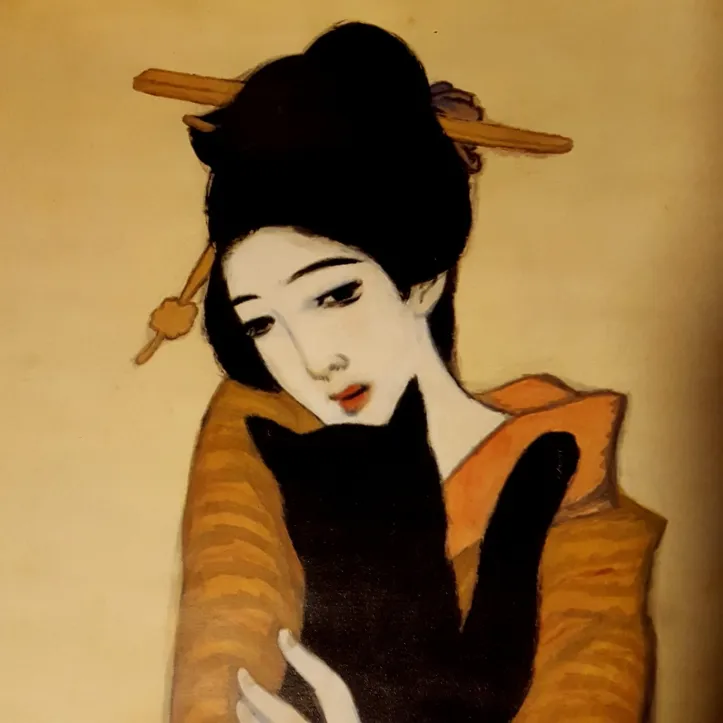
Yumeji Takehisa and the Melancholy of Taishō Japan
Lee Jay Walker
Modern Tokyo Times
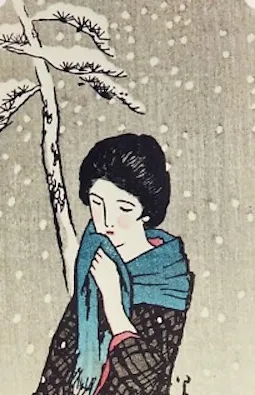
Yumeji Takehisa (1884–1934) died relatively young, and the final chapter of his life was marked by declining health and periods in a sanatorium. Yet his artistic legacy cannot simply be understood through the sadness of his later years. Rather, melancholy, beauty, longing, and solitude became part of a much wider cultural vocabulary through which he expressed the changing emotional landscape of modern Japan.
There is an unmistakable quietness in many of Yumeji’s prints. Women appear thoughtful and pensive, their gestures and expressions often suggesting an inner world that remains beyond the viewer’s reach. His art therefore possesses an intimacy that reflects more than individual sadness. It evokes the atmosphere of an age when traditional Japanese aesthetics were encountering new ideas, new forms of popular culture, and the accelerating modernity of the Taishō period (1912–1926).
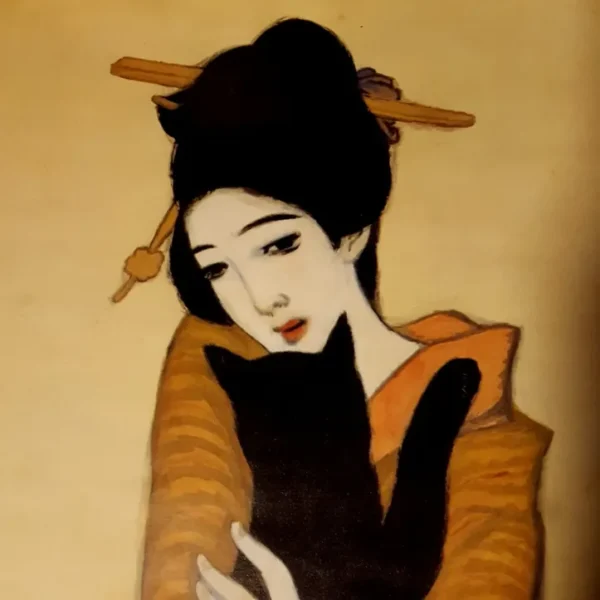
Yumeji’s women became particularly distinctive within this cultural transformation. Elegant yet emotionally distant, they inhabit a world of delicate lines, subdued beauty, fashion, poetry, and contemplation. In this respect, his work belongs to the cultural history of Taishō Japan as much as to the history of Japanese art. His images capture a society increasingly conscious of individuality, romantic emotion, modern fashion, and the changing position of women.
The British Museum says, “Painter and print artist. Yumeji was born in Okayama Prefecture, the son of a sake wholesaler; in 1900 the family moved to Fukuoka, where he worked briefly for a brush-maker and learned the art of line which was always to be the basis of his art. In 1901 he was sent to Tokyo to learn business, but by 1905 he gave up his studies to be an artist.”
This early experience with the brush and the importance of line would remain fundamental to his artistic language. The simplicity of his contours could convey emotion without requiring elaborate visual detail.
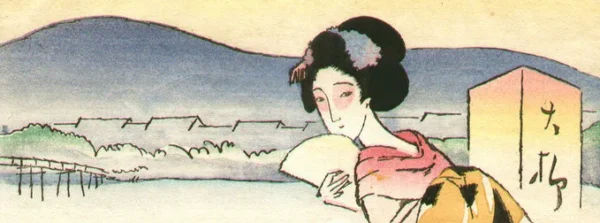
His intellectual and cultural interests were equally reflective of a Japan undergoing profound change. During his early adulthood, Yumeji sympathised with socialism and aspects of Christianity, while artistically he absorbed influences associated with Jugendstil and Art Nouveau. Consequently, his work reveals an intriguing meeting between Japanese sensibilities and wider international currents. Rather than abandoning Japanese aesthetics, he helped demonstrate how Japanese artistic expression could respond to the new cultural atmosphere of the early twentieth century.
The British Museum says, “His most celebrated paintings included the series ‘Nagasaki junikei’ (‘Twelve Views of Nagasaki’, 1920) and ‘Onna judai’ (‘Ten Female Subjects’, 1921). These were water-colours, but he also worked in oils, brush and ink and ‘Nihonga’ techniques.” Such diversity of media reflects an artist moving comfortably between established Japanese traditions and the possibilities of a rapidly modernising artistic world.
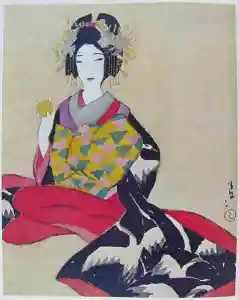
Yumeji Takehisa therefore remains closely connected to the cultural spirit of the Taishō period. His art speaks of women, beauty, fashion, solitude, romance, modernity, and the quieter emotions of everyday life. Behind the graceful lines lies a world in transition — a Japan looking toward the modern age while still carrying the aesthetic memory of its past.
Centuries change. Artistic styles change. Yet the conversation between humanity, emotion, beauty, and culture continues. In Yumeji Takehisa’s delicate world, melancholy itself becomes a form of beauty, preserving an intimate glimpse of Taishō Japan for generations far beyond his own.
https://moderntokyonews.com/?s=Art Past ART articles via MODERN TOKYO NEWS (Modern Tokyo Times group)
MODERN TOKYO TIMES – MODERN TOKYO NEWS – please check https://moderntokyonews.com
Please check Modern Tokyo News at https://moderntokyonews.com for articles going back over 12 years. Sadly, Modern Tokyo Times got hacked and lost 14 years of articles…

Modern Tokyo News is part of the Modern Tokyo Times group
http://moderntokyotimes.com Modern Tokyo Times – International News and Japan News
http://sawakoart.com – Sawako Utsumi’s website and Modern Tokyo Times artist
https://moderntokyonews.com Modern Tokyo News – Tokyo News and International News
PLEASE JOIN ON FACEBOOK
https://www.facebook.com/moderntokyotimes