
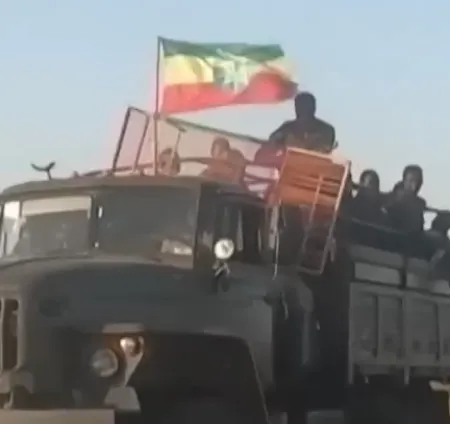
Ethiopia: Abiy Ahmed and Power Concentration (Dangerous Return of Regional Conflict)
Kanako Mita, Sawako Utsumi, and Lee Jay Walker
Modern Tokyo Times
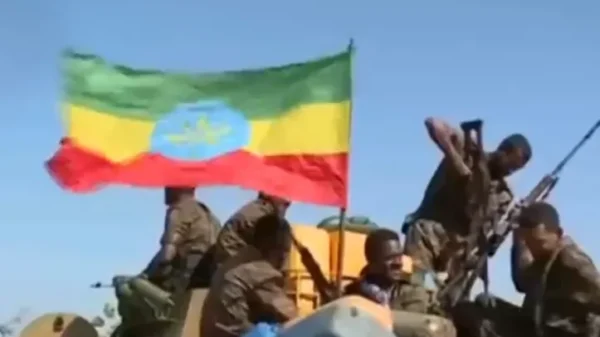
The leadership of Prime Minister Abiy Ahmed has become increasingly defined by the struggle between centralized state power and Ethiopia’s competing ethnic, regional, and political interests. At the heart of this crisis lies a fundamental question of governance: can a diverse federation accommodate regional autonomy and political pluralism, or will power increasingly be concentrated in the hands of the central government and its security apparatus?
This struggle has carried devastating consequences. In Amhara, Tigray, Oromia, and other parts of Ethiopia, communities have experienced armed conflict, displacement, and allegations of serious human rights violations. Reports of extrajudicial killings attributed to government forces have further intensified concerns about accountability and the expanding role of military power in addressing political grievances. The Ethiopian government and opposing armed groups, however, present competing narratives concerning responsibility and security.
The central issue is not simply the brutality of civil war. It is the political structure that allows unresolved regional grievances to become militarized. When the central government prioritizes territorial control and political dominance over meaningful dialogue, demands for autonomy, representation, and security can deepen into armed resistance. Equally, armed groups pursuing their own territorial and political objectives can further endanger civilian populations.
The renewed escalation in Tigray illustrates these dangers. On September 23, Tigrayan forces reportedly seized control of Mekelle’s regional airport from federal police, while Ethiopian Airlines suspended flights to Mekelle, Axum, and Shire. Hence, the national carrier (Ethiopian Airlines) stated, “it suspended flights to Tigray’s capital Mekelle and the cities of Axum and Shire ‘due to the current situation,’ without providing further details.”
The significance extends beyond an airport takeover. Tigray remains deeply affected by the devastating 2020–2022 war between the Tigray People’s Liberation Front (TPLF) and the federal government. In November 2022, the two sides signed a peace agreement under African Union mediation, offering a pathway away from large-scale hostilities. Yet the unresolved political and territorial disputes surrounding the agreement continue to threaten regional stability.
The BBC reports, “It was one of the most-deadly conflicts this century, with the AU’s mediator estimating some 600,000 people died as the fighting drove the region to the precipice of famine.”
This enormous death toll illustrates the human consequences when political competition, military mobilization, and ethnic grievances converge. A return to widespread conflict would place civilians at further risk in a region that has yet to recover from the previous war.
Ethiopia’s crisis also demonstrates that power concentration can produce opposition across former political and military divisions. The TPLF, Amhara nationalist Fano militias, and the Oromo Liberation Army (OLA) have historically been associated with different regional interests and, in some cases, opposing positions on the battlefield. Yet seven armed and opposition groups recently announced an alliance directed against the government of Prime Minister Abiy Ahmed.
Arab News reports, “The groups involved are Tigrayan forces, Amhara nationalist Fano militias and the Oromo Liberation Army (OLA), an active insurgency in Ethiopia’s most populous region — together with four others.”
The emergence of such a coalition underscores the extent of opposition to the federal government, although the groups retain different political objectives and longstanding disputes.
This development presents a wider geopolitical question. When a government seeks to consolidate authority across a multi-ethnic and regionally diverse state, opposition can emerge not from a single ideological movement but from multiple communities with distinct grievances. Their shared opposition to central power does not necessarily establish a unified political vision. Instead, it highlights the fragility of a political system in which regional interests, security concerns, and national authority remain deeply contested.
For Ethiopia, the path toward stability requires more than military responses. The grievances of Amhara, Tigray, Oromia, and other communities need to be addressed through credible political dialogue, civilian protection, accountability, and meaningful federal arrangements. Accordingly, the use of force may temporarily alter territorial control, but it cannot by itself resolve the underlying disputes over political representation and the distribution of power.
The seizure of Mekelle airport and the suspension of flights by Ethiopian Airlines represent another warning sign. Whether the present escalation develops into a wider conflict remains uncertain. However, the renewed confrontation demonstrates that Ethiopia’s unresolved struggle over centralized authority, regional autonomy, and political inclusion continues to carry profound consequences for the country and the wider Horn of Africa.
The concentration of power without durable political accommodation risks transforming regional grievances into a cycle of confrontation, displacement, and renewed humanitarian catastrophe.
https://moderntokyonews.com/category/africa Past AFRICA articles via MODERN TOKYO NEWS
MODERN TOKYO TIMES – MODERN TOKYO NEWS – please check https://moderntokyonews.com
Please check Modern Tokyo News at https://moderntokyonews.com for articles going back over 12 years. Sadly, Modern Tokyo Times got hacked and lost 14 years of articles…

Modern Tokyo News is part of the Modern Tokyo Times group
http://moderntokyotimes.com Modern Tokyo Times – International News and Japan News
http://sawakoart.com – Sawako Utsumi and Modern Tokyo Times artist
https://moderntokyonews.com Modern Tokyo News – Tokyo News and International News
PLEASE JOIN ON FACEBOOK
https://www.facebook.com/moderntokyotimes