
China and South Korea: Strengthened Ties
Michiyo Tanabe, Chika Mori, and Hiroshi Saito
Modern Tokyo Times
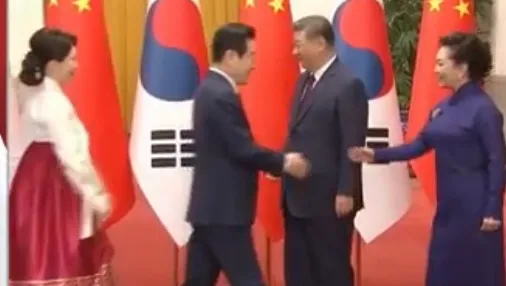
President Lee Jae Myung of South Korea signaled a desire to open a “new phase” in relations with President Xi Jinping of China during his visit to Beijing earlier this year. The gesture was warmly received by China, which has consistently emphasized stability, continuity, and dialogue in its ties with Seoul.
The diplomatic outreach comes at a time of growing regional uncertainty. Sino-Japanese relations remain strained, particularly over Taiwan, while broader tensions linked to the Ukraine conflict and intensifying US-China rivalry continue to reshape strategic calculations across East Asia. Against this backdrop, both Beijing and Seoul see value in strengthening economic cooperation and political dialogue.
Lee’s approach contrasts with that of former president Yoon Suk Yeol, whose administration adopted a more openly critical stance toward China before his impeachment. Beijing appears to view Lee’s presidency as an opportunity to stabilize relations with a key regional power.
The BBC noted that “South Korea is a US security ally—like Japan—but also relies on China for trade. Experts say Lee is expected to keep walking a diplomatic tightrope between Beijing and Tokyo.”
Lee described the visit as “a crucial opportunity” for the “full-scale restoration of South Korea–China relations,” adding: “We want to usher in a new phase in the development of South Korea–China relations.” His remarks emphasized pragmatism, mutual benefit, and diplomatic engagement rather than ideological alignment.
President Xi responded by urging Lee to “firmly stand on the right side of history and make correct strategic choices.” While the statement carried implications regarding Taiwan, it also reflected broader Chinese concerns about sanctions, trade protectionism, and the expansion of geopolitical blocs.
Invoking history, Xi highlighted the shared legacy of resisting Japanese militarism, calling on both nations to “work hand in hand to safeguard the outcomes of the victory of World War Two and uphold peace and stability in Northeast Asia.” The historical reference served as both a reminder of common experiences and an appeal for regional cooperation.
At the same time, South Korea continues to pursue a multi-track foreign policy, seeking closer ties with both China and Japan while also recognizing Beijing’s importance in managing relations with North Korea. Such strategic flexibility remains central to Seoul’s diplomacy.
Echoing this theme, Xinhua reported: “At a moment when trade protectionism is resurging, geopolitical tensions are increasing, and economic uncertainty clouds global recovery, China and South Korea—two major economies in the Asia-Pacific—face a shared responsibility to promote stability and confidence in the region.”
Xi further stressed that both countries “should look after each other’s core interests and major concerns, and insist on properly resolving differences through dialogue and consultation.” The emphasis underscored Beijing’s preference for engagement and managed competition over confrontation.
Improved China–South Korea relations could also provide Seoul with greater diplomatic space when tensions rise with Japan. Northeast Asia stands to benefit not from deepening divisions or military posturing, but from sustained dialogue, strategic patience, and diplomatic balance.
Lee Jay Walker, a Modern Tokyo Times analyst, observes: “Northeast Asia urgently requires deeper diplomacy, not sharper divisions. In a region burdened by unresolved historical grievances, intensifying strategic rivalries, and rising military postures, the space for calm dialogue has narrowed at a dangerous pace.”
He adds: “South Korea is uniquely positioned to serve as an honest broker between China and Japan. Geographically, economically, and historically intertwined with both powers, Seoul possesses both the credibility and incentive to encourage restraint, confidence-building, and sustained communication.”
If handled carefully, South Korea’s engagement with China need not come at the expense of its ties with Japan or its alliance commitments. Rather, it can serve as a diplomatic bridge during periods of tension, providing opportunities for dialogue when rhetoric hardens and mistrust grows.
Ultimately, stability in Northeast Asia will depend less on confrontation than on keeping channels of communication open. In a region shaped by history, power, and uncertainty, patient diplomacy and sustained engagement remain the strongest foundations for peace.
https://moderntokyonews.com/?s=China Past CHINA articles via MODERN TOKYO NEWS
MODERN TOKYO TIMES – MODERN TOKYO NEWS – please check https://moderntokyonews.com
Please check Modern Tokyo News at https://moderntokyonews.com for articles going back over 12 years. Sadly, Modern Tokyo Times got hacked and lost 14 years of articles…

Modern Tokyo News is part of the Modern Tokyo Times group
http://moderntokyotimes.com Modern Tokyo Times – International News and Japan News
http://sawakoart.com – Sawako Utsumi and Modern Tokyo Times artist
https://moderntokyonews.com Modern Tokyo News – Tokyo News and International News
PLEASE JOIN ON TWITTER
https://twitter.com/MTT_News Modern Tokyo Times
PLEASE JOIN ON FACEBOOK
https://www.facebook.com/moderntokyotimes