
Japan Rinpa Art: Nature and the Enduring Beauty of Japanese Aesthetics
Lee Jay Walker
Modern Tokyo Times
Nichiren Buddhist merchants in the Kyoto environs – and further afield – desired a fusion of art, high culture, faith, nature, and other essential dimensions of life. Accordingly, wealthy aristocratic families and Nichiren Buddhist merchants joined forces and strongly supported the Rinpa art movement during its infancy. Their patronage reflected a wider appreciation of artistic refinement, cultural expression, and the spiritual dimensions of beauty. However, the artists in this article belong to the Rinpa art world once this stunning tradition had become firmly established, carrying its distinctive aesthetics into subsequent generations.
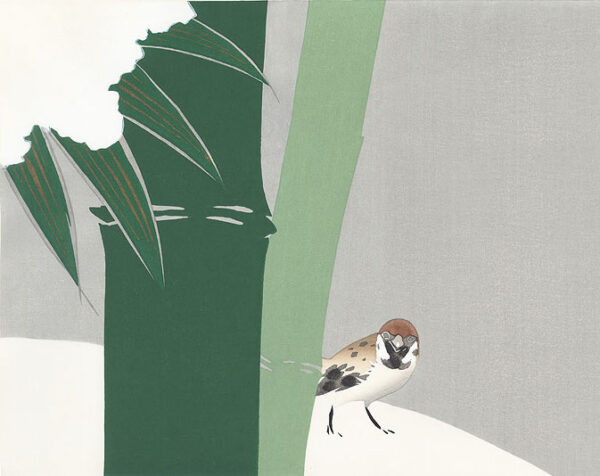
Kamisaka Sekka (1866–1942) produced the first stunning art piece. He emerges as the final dazzling flame of the Rinpa tradition — a twilight figure poised at the edge of fading splendour and the dawning of modernity. Hence, in the truest spirit of creation, his art was never a mere echo of the past.
Sekka transformed homage into rebirth. He breathed into Rinpa a dreamlike pulse — a rhythm of wind, water, and the natural world — that lifted its forms beyond reverence into revelation. The Japanese appreciation of nature, so deeply embedded in traditional aesthetics and spiritual sensibilities, finds fresh expression through his remarkable use of colour, pattern, and movement. Within his work lingers a freshness both timeless and untamed, as though the centuries themselves inhale anew. Even now, the current of his vision flows through modern Japan, where his colours shimmer still, undimmed upon the surface of imagination.
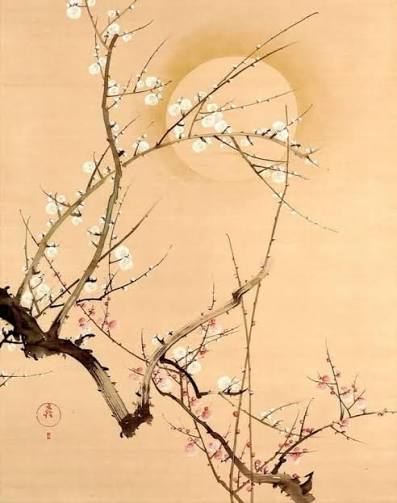
Sakai Hōitsu (1761–1829) stands among the most lustrous spirits of the Edo Period — a painter whose vision bridged elegance and eternity. His works still breathe across centuries, inviting awe not only for their beauty but also for the tranquil refinement of the age that nurtured them.
The quiet current of Buddhism flowed through him as naturally as ink across silk, shaping both his brush and his being. In the twilight of his life, Hōitsu embraced the monastic path, seeking in contemplation what his art had long whispered: the stillness at the heart of all things. This spiritual dimension resonates with wider Japanese cultural traditions, in which artistic expression, impermanence, nature, and contemplation frequently meet.
Yet even as he turned inward, he turned outward — guiding younger artists towards the splendour of Rinpa and ensuring that its delicate pulse would not fade. Through their hands, his spirit endures, serene and radiant, like a lotus opening upon still water. Thus, his legacy extends beyond individual masterpieces into the continuing transmission of Japanese artistic culture.
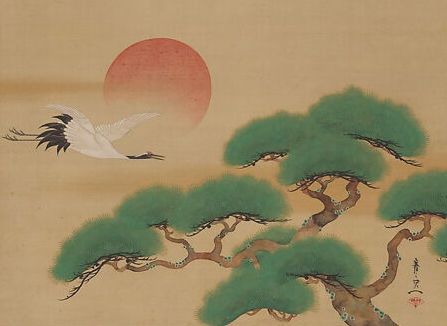
Suzuki Kiitsu (1796–1858) created a wealth of breathtaking works that shimmer with elegance and refinement. His art stands as both a personal triumph and a luminous testament to the enduring spirit of the Rinpa tradition — a style that had long enriched the tapestry of Japanese aesthetics.
Born in the twilight years of the Edo period, Kiitsu possessed a rare sensitivity to the shifting tides of his time. Even as the first ripples of Western influence began to touch Japan’s shores, he maintained a profound dialogue between innovation and tradition. His works, poised between reverence and renewal, capture the delicate balance of an era on the verge of transformation — just before the sweeping changes of the Meiji Restoration (1868).
The Metropolitan Museum of Art, concerning the artwork above by Kiitsu, observes: “A crane soars across the sun, and the evergreen pine tree complements the association of this avian species with longevity. The simple, bold image may be viewed as an abbreviated representation of Mount Hōrai, mythical island of the immortals, intended for display at the onset of the lunar calendar. Suzuki Kiitsu, pupil of Sakai Hōitsu (1761–1828), ensured the continuity of Rinpa art into modern times, enlivening a genre that might otherwise have become overly formulaic and static.”
The symbolism is especially revealing. The crane and evergreen pine evoke longevity, while Mount Hōrai introduces the mythical imagination of immortality into the composition. Such imagery reflects the importance of auspicious symbolism in Japanese culture, particularly during the New Year, when hopes for renewal, prosperity, and long life traditionally find artistic expression. Through a seemingly simple composition, Kiitsu brings together nature, mythology, seasonal customs, and the refined visual language of Rinpa.
https://moderntokyonews.com/?s=Art Past ART articles via MODERN TOKYO NEWS (Modern Tokyo Times group)
MODERN TOKYO TIMES – MODERN TOKYO NEWS – please check https://moderntokyonews.com
Please check Modern Tokyo News at https://moderntokyonews.com for articles going back over 12 years. Sadly, Modern Tokyo Times got hacked and lost 14 years of articles…

Modern Tokyo News is part of the Modern Tokyo Times group
http://moderntokyotimes.com Modern Tokyo Times – International News and Japan News
http://sawakoart.com – Sawako Utsumi and Modern Tokyo Times artist
https://moderntokyonews.com Modern Tokyo News – Tokyo News and International News
PLEASE JOIN ON FACEBOOK
https://www.facebook.com/moderntokyotimes