Japanese Art and Delightful Mix of Birds
Lee Jay Walker
Modern Tokyo Times
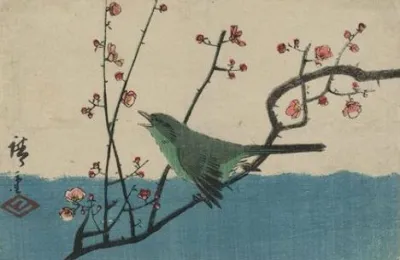
The celebrated Utagawa Hiroshige was born into the stillness and ritual grace of the Edo Period, yet his vision would ripple far beyond it. After his passing, his quiet mastery of line, season, and atmosphere found new life in Europe, stirring the imaginations of artists such as Pierre Bonnard, Mstislav Dobuzhinsky, Paul Gauguin, Vincent van Gogh, Henri de Toulouse-Lautrec, Édouard Manet, and Claude Monet. In their hands, echoes of Edo found new colors, yet the soul of Hiroshige endured.
In the delicate print above, Hiroshige composes a fleeting poem in image: a warbler poised upon a plum branch. Nothing is excessive. The bird, light as breath, meets the angled bloom of the branch in a moment of suspended time. Simplicity here is not absence, but refinement — each line a quiet act of restraint, each blossom a whisper of spring’s arrival.
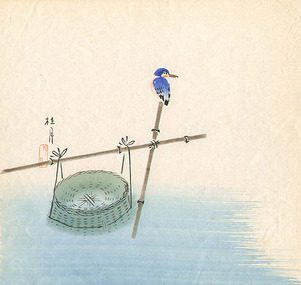
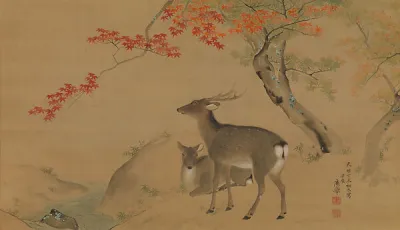
The second luminous work belongs to Matsubayashi Keigetsu, whose art moves within the cultivated currents of Nanga, the literati tradition shaped by Chinese influence yet reimagined through Japanese sensibility. His paintings carry a decorative elegance without losing intellectual depth, reflecting a lifetime spent traversing the artistic worlds of China and Japan.
As noted by Bonhams, “Considered one of the foremost Nanga school artists of the 20th century, Keigetsu exhibited at both the Bunten and after the Pacific War at the Nitten. He was a member of the Art Committee of the Imperial Household, and was honored with the Order of Cultural Merit in 1959. His paintings are in the collections of the Tokyo National Museum of Modern Art and the Tokyo National Museum.”
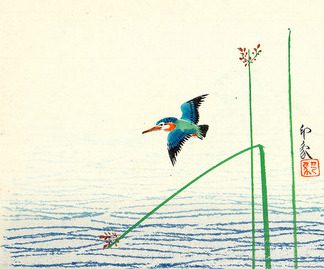
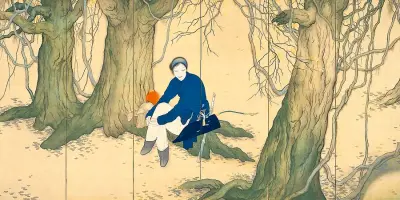
Meanwhile, Dōmoto Inshō unfolds a different yet equally compelling artistic journey. His work, evolving across the shifting landscapes of modern Japan, reveals a restless intelligence and refined technical command. A teacher as well as a creator, he guided figures such as Imoto Tekiho, extending his influence beyond canvas into lineage.
The British Museum reflects on his legacy: “Domoto designed only a few prints but is remembered as an innovative ‘Nihonga’ painter in the Kyoto tradition. He was born in Kyoto… He graduated in 1910 from the Kyoto Shiritsu Bijutsu Kogei Gakko (Kyoto City School of Fine Arts and Crafts). He initially did design work for Mitsukoshi Department Store and for the silk textile firm Tatsumura Heizo. He then entered the Kyoto Shiritsu Kaiga Sen-mon Gakko (Kyoto City Specialist School of Painting), finally graduating after research studies in 1924. Meanwhile he was actively painting and became a pupil of the ‘Nihonga’ artist Nishiyama Suisho (1879-1958)…”
Across these artists, one senses a quiet continuum: from Hiroshige’s distilled moments of nature to Keigetsu’s literati elegance and Inshō’s modern vitality. Each, in their own way, captures not merely the visible world — but the passing breath within it.
MODERN TOKYO TIMES – MODERN TOKYO NEWS – please check https://moderntokyonews.com
Please check Modern Tokyo News at https://moderntokyonews.com for articles going back over 10 years. Sadly, Modern Tokyo Times got hacked and lost 14 years of articles…

Modern Tokyo News is part of the Modern Tokyo Times group
http://moderntokyotimes.com Modern Tokyo Times – International News and Japan News
http://sawakoart.com – Sawako Utsumi’s website and Modern Tokyo Times artist
https://moderntokyonews.com Modern Tokyo News – Tokyo News and International News
PLEASE JOIN ON TWITTER
https://twitter.com/MTT_News Modern Tokyo Times
PLEASE JOIN ON FACEBOOK