Mali Crisis: Russia Seeks to Stem Islamist Encroachment on Bamako
Murad Makhmudov, Noriko Watanabe, and Lee Jay Walker
Modern Tokyo Times
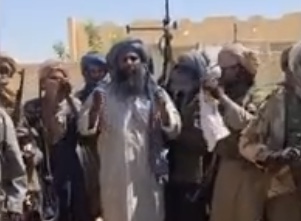
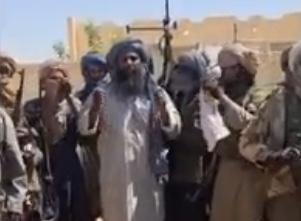
Mali’s structural fragility was evident long before the recent, synchronized offensives launched by Jama’at Nusrat al-Islam wal-Muslimin (JNIM) and Tuareg separatists aligned with the Coordination of Azawad Movements (CMA). Yet this latest escalation has laid bare the depth of the vulnerability, exposing how swiftly pressure can fracture already weakened institutions.
JNIM had already demonstrated its power to strangle important lifelines — imposing fuel shortages and economic blockades around Bamako and across key logistical corridors. Other Islamist factions, including the Islamic State Sahel Province (ISSP), replicated these tactics, compounding systemic strain and undermining the regime’s operational coherence. Against this deteriorating backdrop, the dual attacks across multiple regions by Islamist and Tuareg forces achieved what had seemed increasingly plausible: strategic surprise against Mali’s military leadership and their Russian paramilitary counterparts from the Kremlin-controlled Africa Corps.
The scale of the offensive was striking. Attacks on Saturday reportedly involved at least 12,000 insurgents, according to the Russian Africa Corps. The insurgency did not merely probe the mililtary defenses of Mali (and the Russian Africa Corps) — it struck decisively, culminating in the killing of Defense Minister Sadio Camara during the offensive. This alone signals a breach at the upper levels of the state.
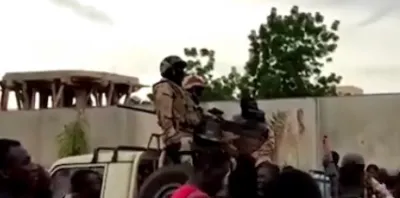
Visual evidence emerging in the aftermath underscores Moscow’s urgency. Footage of Russian paramilitary airstrikes and helicopter attacks near Bamako reveals a determined effort to blunt insurgent momentum. Strategically, the calculation from Moscow appears clear: stabilize the capital, reinforce other strategic regions, and allow Malian forces the time and space to regroup and entrench.
The BBC reports, “The Kremlin-controlled Africa Corps, which supports Malian military operations, has posted several videos since Saturday showing air strikes and attack helicopters engaging with rebel troops. BBC Verify located the clips to the town of Kati, around 20km (12 miles) from Bamako.”
This operational posture is reinforced by Moscow’s stance. The Russian Federation has stated that the Africa Corps will remain in Mali “to combat extremism, terrorism and other harmful phenomena and will continue to provide assistance to the current government.”
Within Mali, officials have responded with equal intensity on the informational front. Fousseynou Ouattara, Vice President of Mali’s Transitional Council Defense Commission, said: “… (international) media smear campaigns were aimed at preparing international public opinion to present barbaric and cowardly terrorist attacks as acts of liberation, but the reality on the ground has destroyed their plans.”
Russia has simultaneously externalized responsibility, alleging that European and Ukrainian mercenaries have trained insurgent elements. Moscow further claims that, in conjunction with Malian forces, over 2,500 fighters have been killed in the fighting — an assertion that, if accurate, underscores both the scale and ferocity of the conflict.
TASS News reports, “The ministry specified that four major cities were attacked during the coup attempt: the Malian capital Bamako, as well as the cities of Sevare, Gao, and Kidal.”
On the ground, however, realities have forced difficult choices. Facing numerical inferiority and mounting pressure, Malian forces and the Russian Africa Corps withdrew from Kidal — a tactical contraction aimed at preserving rather than risking encirclement. Since then, efforts have focused on consolidating vulnerable sectors, particularly around the capital, where control is synonymous with regime survival.
The situation remains finely poised. The potential involvement of Burkina Faso and Niger — regional allies with aligned security interests — introduces an additional layer of strategic uncertainty. Their intervention could either stabilize the front or widen the conflict’s scope given Islamist ideology.
In the immediate term, the trajectory of this will hinge on whether Mali and its Russian partners can successfully fortify Bamako and other critical nodes against a determined, adaptive, and multi-front insurgency. Failure to do so risks not merely territorial losses, but a deeper unraveling that could redefine the balance of power across the Sahel.
MODERN TOKYO TIMES – MODERN TOKYO NEWS – please check https://moderntokyonews.com
Please check Modern Tokyo News at https://moderntokyonews.com for articles going back over 10 years. Sadly, Modern Tokyo Times got hacked and lost 14 years of articles…

Modern Tokyo News is part of the Modern Tokyo Times group
http://moderntokyotimes.com Modern Tokyo Times – International News and Japan News
http://sawakoart.com – Sawako Utsumi’s website and Modern Tokyo Times artist
https://moderntokyonews.com Modern Tokyo News – Tokyo News and International News
PLEASE JOIN ON TWITTER
https://twitter.com/MTT_News Modern Tokyo Times
PLEASE JOIN ON FACEBOOK