
Russian Federation and Buffer Zone (Threat of Deeper Military Strikes)
Noriko Watanabe, Michiyo Tanabe, and Lee Jay Walker
Modern Tokyo Times
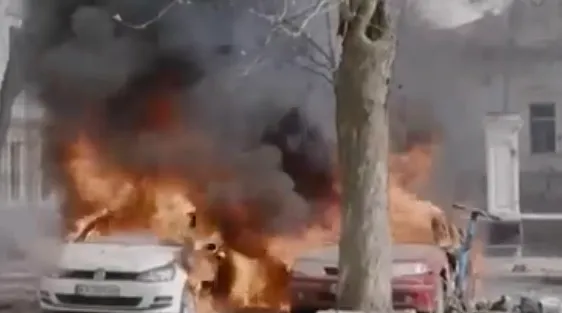
The armed forces of the Russian Federation and pro-Russian regional allies continue to make gradual advances against Ukrainian forces in contested areas of southeastern Ukraine. While the pace remains slow, Russia appears determined to consolidate gains and expand security buffers along its borders. Following the recapture of Sudzha in the Kursk region in 2025, Moscow has increasingly emphasized the creation of a buffer zone in Ukraine’s Sumy region and other border areas adjacent to Novorossiya.
Russia now appears focused on capturing Konstantinovka and other strategic positions before shifting attention elsewhere. According to Tass News, assault groups from Battlegroup South have liberated 120 buildings in Konstantinovka and continue operations against encircled Ukrainian units from the 28th and 100th Mechanized Brigades.
At the same time, Ukraine has intensified strikes deeper inside the Russian Federation, including attacks on energy-related infrastructure. This complicates any peace process before the completion of what Moscow terms its “Special Military Operation.” President Vladimir Putin, who faces criticism from more hawkish domestic voices for what they regard as a restrained approach, must balance military objectives with diplomacy as the United States is increasingly distracted by tensions involving Iran – while Ukraine continues to rely on NATO support (including the economic lifeline).
Last year, Major General Apti Alaudinov of the Akhmat Special Forces stated that Russia required a buffer zone in Ukraine’s Sumy region. Developments on the battlefield suggest that this objective remains firmly in place.
The situation also appears increasingly difficult for Ukraine in the Zaporozhye region, where reports indicate that elements of the Ukrainian 79th Brigade are exhausted and seeking withdrawal.
Russia and its regional allies seek a settlement that acknowledges territorial realities and addresses Moscow’s security concerns. Any agreement that permits Ukrainian membership in NATO or allows unrestricted military rearmament is unlikely to gain support among Russian elites.
While the Ukrainian armed forces have proven more resilient than many predicted, their growing reliance on strikes deep inside Russia reflects both military necessity and strategic limitations. Such attacks also risk strengthening hardline voices in Moscow who favor a more forceful response.
If NATO powers genuinely believed Russia was in a position of weakness, they would likely press for far greater concessions. However, several nations—including the United States, Hungary, Slovakia, and others—appear to recognize that Ukraine is unlikely to achieve a decisive military victory and that a prolonged war may further weaken the country.
Ultimately, it is hoped that all parties can find a path toward peace, despite the many obstacles that remain. The battlefield currently favors the Russian Federation, and a continuation of the conflict risks further territorial losses for Ukraine. Equally concerning, continued strikes deep inside Russia—particularly against energy infrastructure—could increase the danger of a wider regional confrontation.
https://moderntokyonews.com/?s=Russia Past RUSSIAN FEDERATION articles via MODERN TOKYO NEWS
MODERN TOKYO TIMES – MODERN TOKYO NEWS – please check https://moderntokyonews.com
Please check Modern Tokyo News at https://moderntokyonews.com for articles going back over 12 years. Sadly, Modern Tokyo Times got hacked and lost 14 years of articles…

Modern Tokyo News is part of the Modern Tokyo Times group
http://moderntokyotimes.com Modern Tokyo Times – International News and Japan News
http://sawakoart.com – Sawako Utsumi’s website and Modern Tokyo Times artist
https://moderntokyonews.com Modern Tokyo News – Tokyo News and International News
PLEASE JOIN ON TWITTER
https://twitter.com/MTT_News Modern Tokyo Times
PLEASE JOIN ON FACEBOOK
http://facebook.com/moderntokyotimes