Japanese Art and High Culture
Lee Jay Walker
Modern Tokyo Times
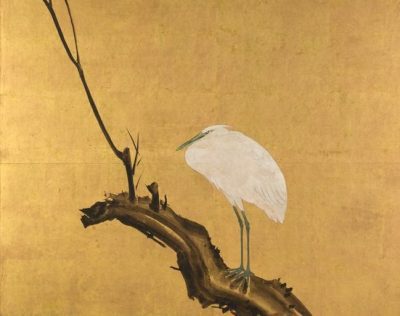
The esteemed artist Maruyama Ōkyo stands as a quiet revolutionary within the artistic currents of the Edo Period. With a discerning eye and an unyielding devotion to observation, he reshaped the language of painting—bridging the aesthetic worlds of Japan, the refined traditions of China, and the distant, half-glimpsed techniques of the West. In Ōkyo’s hands, art became not merely representation, but revelation: nature rendered with intimacy, vitality, and a new sense of realism that stirred the cultural heart of Kyoto.
From humble beginnings as a farmer’s son, Ōkyo journeyed to the cultural capital of Kyoto, where he trained under the Kano master Ishida Yūtei. Yet, rather than remaining bound by orthodoxy, he forged a path of innovation. His paintings—alive with birds in mid-flight, animals caught in fleeting motion, and landscapes breathing with quiet life—reflect a profound study of the natural world. At the same time, he absorbed the enduring elegance of Chinese bird-and-flower traditions, blending them seamlessly into a distinctly Japanese vision. Thus emerged the Maruyama school, a legacy rooted in both discipline and daring.
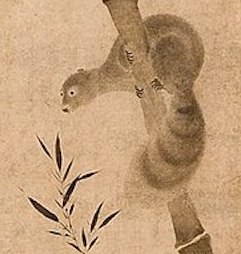
Turning back to an earlier age, the shadowy yet luminous figure of Sōami offers another vital thread in this artistic tapestry. Living during the cultural flowering of the Muromachi era, Sōami was deeply shaped by the spiritual and aesthetic currents of Zen Buddhism and the refined sensibilities of Chinese Southern School painting. Though much of his life remains veiled in time, his artistic voice endures—subtle, contemplative, and steeped in the quiet rhythms of ink and space.
As a curator within the Ashikaga shogunate, Sōami stood at a crossroads of cultures. Immersed in masterworks from the Southern Song and Yuan dynasties, he absorbed their delicate brushwork and compositional grace. Yet he did not merely imitate—he transformed. By expanding intimate album leaf and handscroll formats into grander compositions for temple walls and elite residences, Sōami elevated the scale and presence of these traditions, allowing them to resonate within the architectural and spiritual spaces of Japan.
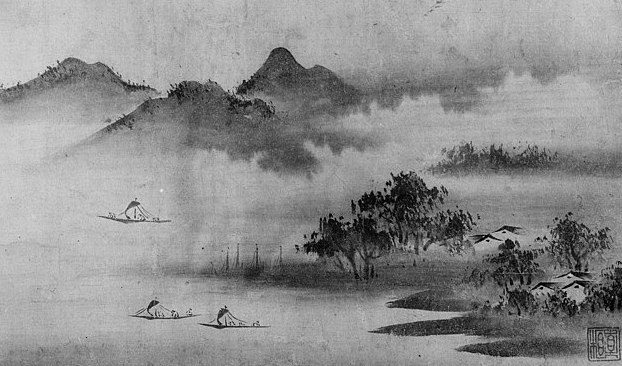
In this way, both Ōkyo and Sōami—though separated by centuries—share a profound artistic kinship. Each, in his own era, became a conduit through which external influences were not simply adopted, but reimagined. Their works reveal a dialogue between observation and imagination, between imported tradition and native sensibility. Together, they illuminate the evolving soul of Japanese art: a continuum shaped by openness, adaptation, and the timeless pursuit of beauty.

Modern Tokyo News is part of the Modern Tokyo Times group
http://moderntokyotimes.com Modern Tokyo Times – International News and Japan News
http://sawakoart.com – Sawako Utsumi and Modern Tokyo Times artist
https://moderntokyonews.com Modern Tokyo News – Tokyo News and International News
PLEASE JOIN ON TWITTER
https://twitter.com/MTT_News Modern Tokyo Times
PLEASE JOIN ON FACEBOOK