
Haiti and Endless Instability (Political Inertia)
Noriko Watanabe, Kanako Mita, and Michiyo Tanabe
Modern Tokyo Times
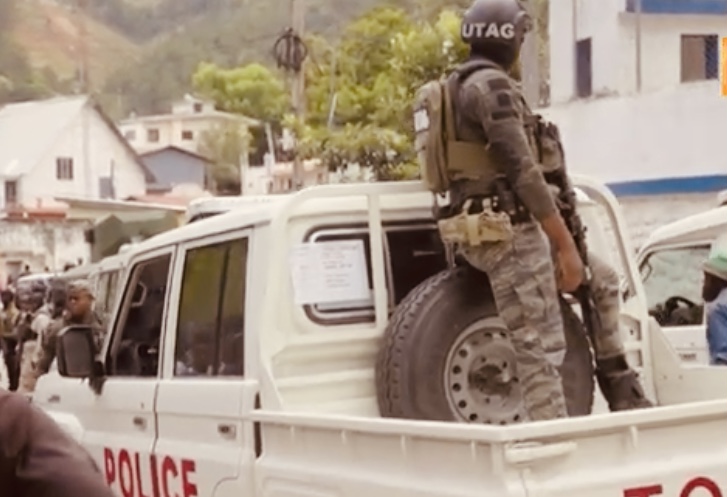
Haiti has become one of the most devastating humanitarian disasters in the world — a place where deaths flow year after year, ordinary life has been overtaken by extreme violence, political paralysis and systemic breakdown, and where the authority of the state has steadily receded before the power of armed gangs. United Nations-designated human rights expert William O’Neill once described conditions as “hell on earth” — a devastating phrase, but one that remains painfully relevant to the lived reality of millions of Haitians.
Over the weekend, at least 47 people were brutally killed and another 22 injured in a gang attack in Kenscoff, near Port-au-Prince. Homes were burned, civilians were terrorized, and families were again forced to flee. The massacre occurred despite repeated promises that security would be restored, reinforcing a profound sense among Haitians that their political leaders and international partners have repeatedly failed to protect them.
Attacks in Port-au-Prince and its surrounding areas have become an almost permanent feature of daily existence. Various gangs levy extortion, obstruct commerce, restrict humanitarian access and impose brutal, arbitrary rule over ordinary civilians. Their expanding presence has transformed once-normal streets into no-go areas, while kidnapping, murder, arson and sexual violence have become weapons of domination. This is not merely criminality; it represents the progressive erosion of state sovereignty itself.
The violence is also spreading far beyond the capital. In March 2026, The Guardian reported that at least 70 people were killed and 30 injured during a gang attack in Haiti’s agricultural heartland of Artibonite — a massacre whose death toll was substantially higher than the initial official estimate. Nearly 6,000 people were reportedly forced from their homes. Since then, fresh massacres, killings and forced displacement have continued, demonstrating that the crisis is no longer confined to Port-au-Prince but is consuming wider areas of the country.
The scale of the killing is enormous. UN human rights figures recorded at least 5,601 people killed in gang violence in 2024, alongside 2,212 injured and 1,494 kidnapped. Yet the bloodshed has not abated. During the first quarter of 2026 alone, the United Nations recorded at least 1,642 people killed and 745 injured, with BINUH warning that insecurity remained a “daily and unbearable reality” for large numbers of Haitians. Such figures reveal something more disturbing than another cycle of violence: Haiti is becoming trapped in a permanent humanitarian emergency.
Lee Jay Walker, Modern Tokyo Times analyst, says: “The UN reports a harrowing reality marked by extrajudicial killings, human trafficking, murder, child exploitation, gang rape, and other severe human rights abuses. Haiti has also experienced grave abuses involving international personnel in previous UN missions. These scandals, together with the cholera disaster, have left a deep legacy of mistrust among ordinary Haitians.”
Historical UN investigations documented serious allegations and cases of sexual exploitation and abuse involving peacekeepers in Haiti, while the United Nations eventually acknowledged its role in the devastating cholera outbreak associated with its former mission.
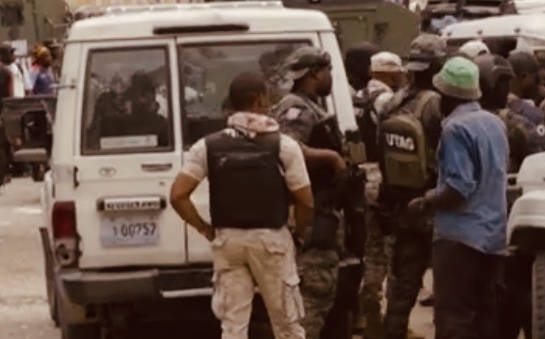
AP News reports that “powerful gangs under a broad alliance” have cemented their influence over Haiti’s capital and expanded into neighbouring regions despite repeated attempts by foreign nations to reinforce the country’s outgunned police. The tragedy is therefore compounded by a fundamental imbalance: heavily armed criminal organisations possess the initiative, while the Haitian state struggles to project authority beyond limited pockets of territory.
The Kenya-led Multinational Security Support Mission, deployed in 2024, was intended to help reverse this deterioration. Yet its limitations became increasingly apparent, with shortages of personnel, equipment and funding severely restricting its ability to confront Haiti’s gangs. A new UN-backed Gang Suppression Force is now being assembled with a much larger proposed deployment, but Haitians have already witnessed international promises arrive with great fanfare and produce painfully limited results.
Doctors Without Borders has documented another horrifying dimension of the catastrophe. At its Pran Men’m clinic in Port-au-Prince, the number of survivors of sexual and gender-based violence receiving care almost tripled, from an average of 95 admissions per month in 2021 to more than 250 per month in 2025. MSF reported that women and girls of all ages were being targeted, while 57 percent of those treated since 2022 reported assaults by armed groups, often involving multiple perpetrators. The brutality is therefore not simply measured in bodies; it is also measured in shattered families, traumatized children and women forced to live with the consequences of violence long after the gunmen have disappeared.
The Haitian population’s mistrust of politicians, international organisations and foreign interventions is rooted in a long and painful history of failed promises, political corruption, foreign interference, UN scandals and humanitarian disasters. The cholera catastrophe associated with the former UN mission remains particularly important because it reinforced the perception that those arriving in Haiti to provide assistance could themselves become sources of immense suffering. Such memories matter because humanitarian intervention cannot succeed without public legitimacy and trust.
Haiti today is therefore more than a country in crisis — it is a society under relentless siege. Armed gangs have supplanted public institutions across vast areas; civilians live with murder and kidnapping as daily realities; sexual violence has become an instrument of terror; hunger and displacement stalk millions; and the authority of the state continues to erode. Around 1.5 million Haitians have been internally displaced, according to recent estimates, while gangs reportedly control large portions of Port-au-Prince.
The greatest danger is that the world becomes accustomed to Haiti’s suffering. Another massacre appears in the headlines, another international mission is announced, another political promise is made — and then attention moves elsewhere. But for Haitians, there is no moving elsewhere. They remain amid the ruins of institutions that were supposed to protect them.
Haiti does not merely need another declaration of concern; it needs security, accountable governance, functioning institutions, humanitarian access and a sustained international commitment capable of breaking the cycle of impunity.
Without this, the country risks becoming not simply a forgotten humanitarian catastrophe, but a permanent symbol of what happens when a state collapses while the world watches.
https://moderntokyonews.com/category/north-america/ Past NORTH AMERICA articles via MODERN TOKYO NEWS (Modern Tokyo Times group)
MODERN TOKYO TIMES – MODERN TOKYO NEWS – please check https://moderntokyonews.com
Please check Modern Tokyo News at https://moderntokyonews.com for articles going back over 12 years. Sadly, Modern Tokyo Times got hacked and lost 14 years of articles…

Modern Tokyo News is part of the Modern Tokyo Times group
http://moderntokyotimes.com Modern Tokyo Times – International News and Japan News
http://sawakoart.com – Sawako Utsumi and her website – Modern Tokyo Times artist
https://moderntokyonews.com Modern Tokyo News – Tokyo News and International News
PLEASE JOIN ON FACEBOOK
http://facebook.com/moderntokyotimes