
The Audacity of Chaos: Obama, Arthur Zimmermann and the Dangerous Politics of Destabilization
Kanako Mita, Sawako Utsumi, and Lee Jay Walker
Modern Tokyo Times
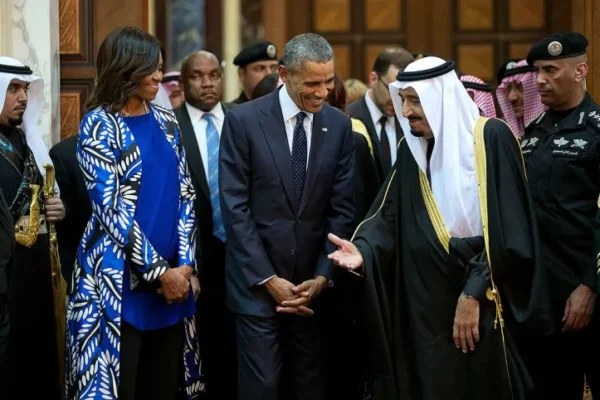
The legacy of former American President Barack Obama is not simply contained within the title of his celebrated book, The Audacity of Hope. For Libya, Syria, Yemen, the Sahel and other regions touched by the consequences of American interventionism, a very different phrase may be more appropriate: the audacity of chaos. This is not to suggest that Obama literally followed the policies of Arthur Zimmermann, the German foreign secretary during the First World War. Rather, the comparison raises a broader and uncomfortable historical question: what happens when a great power attempts to manipulate instability abroad in the belief that the resulting forces can be controlled?
In 1917, Germany was fighting for its survival and increasingly sought to weaken its enemies through indirect means. The Zimmermann Telegram proposed an alliance with Mexico should the United States enter the war, with Germany offering financial assistance and supporting Mexico’s attempt to recover territory lost to the United States. Germany also facilitated Lenin’s journey back to Russia, hoping that revolutionary upheaval would weaken the Russian war effort from within. The wider lesson was brutally simple: great powers can manipulate distant political forces, but they cannot necessarily determine what those forces become once unleashed. It is this historical lesson, rather than a literal comparison between Zimmermann and Obama, that deserves consideration.
Libya provides perhaps the clearest example. The Obama administration supported the NATO military intervention that helped bring down Muammar Gaddafi in 2011. Yet removing a government proved considerably easier than constructing a stable political order in its aftermath. The consequences have been devastating. Libya descended into political fragmentation, competing armed factions and prolonged civil conflict. Islamist militants, including ISIS, exploited the vacuum, while rival governments and foreign powers subsequently competed for influence. The country that had once attracted workers from across Africa, including from the Sahel, became increasingly associated with militia rule, human trafficking, migrant exploitation and a major route towards Europe.
The question therefore remains unavoidable: if a powerful state helps destroy an existing political order, what responsibility does it bear for the vacuum that follows? The consequences did not remain inside Libya’s borders. Weapons, fighters, criminal networks and political instability spread across North Africa and into the Sahel, contributing to an environment in which extremist organisations and armed groups could flourish. The destruction of a state therefore became something larger than the destruction of one government. It became the destruction of an entire regional balance.
Yemen presents another disturbing contradiction. The Obama administration did not create the Saudi-Iranian rivalry, nor did it begin the broader crisis in Yemen. But Washington supported the Saudi-led intervention that began in 2015, while continuing extensive military cooperation with Riyadh. Reuters reported that the Obama administration had offered Saudi Arabia more than $115 billion in weapons, military equipment and training, making it the largest such package of any administration during the long American-Saudi alliance. Here lies another uncomfortable question: can a government simultaneously speak about human rights while supplying enormous quantities of military equipment to an ally involved in a devastating war?
The suffering of Yemen’s children gave that contradiction a human face. UNICEF spokesperson James Elder described Yemen as an extraordinarily dangerous place for children, warning that children were dying from preventable causes while the humanitarian crisis continued to deteriorate. Behind the statistics were children, families and communities whose lives had been transformed by a war over which they had little control. The human cost of geopolitical calculations is ultimately measured not in diplomatic communiqués or military contracts, but in lives destroyed, families displaced and children deprived of the most basic necessities.
Syria represents an even more complicated chapter. The Obama administration’s policy towards Bashar al-Assad shifted repeatedly. Washington demanded Assad’s departure, supported elements of the Syrian opposition and later concentrated heavily on defeating ISIS. In 2014, the administration sought $500 million from Congress to train and equip supposedly moderate Syrian rebels. Yet the reality on the ground was vastly more complicated than the terminology suggested. Syria was already a battlefield containing competing regional powers, Islamist organisations, ethnic and religious communities, foreign intelligence agencies and rival armed groups. Once weapons entered such an environment, Washington could not dictate where every weapon would ultimately end up or how the regional balance would evolve.
The CIA also operated a covert programme known as Timber Sycamore to support selected Syrian opposition forces. Whatever the intentions of individual policymakers, the broader strategic problem remained: how can an outside power manufacture a reliable political opposition inside a fragmented civil war without strengthening forces whose objectives ultimately differ from its own? The programme experienced severe difficulties, while the Syrian battlefield became increasingly dominated by forces far removed from the concept of a moderate democratic opposition.
Meanwhile, ISIS seized vast territories across Iraq and Syria. Al-Qaeda-linked organisations remained powerful. Yazidis suffered genocide and enslavement. Christians were driven from ancestral communities. Shia Muslims faced massacres. Alawites and other communities suffered horrific violence. The Syrian tragedy therefore demonstrates the danger of assuming that an armed proxy can remain permanently within the political boundaries originally imagined by the power supporting it.
This is where the comparison with Arthur Zimmermann becomes intellectually interesting. Zimmermann was not attempting to create chaos simply for the sake of chaos. Germany was attempting to weaken its enemies through indirect strategic pressure. Mexico was one element of that calculation. Revolutionary Russia became another dimension of German wartime strategy. The ultimate lesson, however, was not that Germany controlled history. It was the opposite. History escaped the control of those who attempted to manipulate it.

A century later, the consequences of American interventionism during the Obama presidency invite a different version of the same question. The United States did not create every conflict in Libya, Syria, Yemen, Egypt or the Sahel. Nor can every subsequent death, terrorist attack or political collapse be placed at Obama’s feet. But Washington possessed enormous power. It intervened. It armed. It trained. It supported allies. It backed opposition movements. It participated in military operations. And it made calculations about what would happen after those interventions. The central historical question is therefore not whether Obama personally desired chaos. It is whether the policies pursued under his administration sufficiently accounted for the chaos that could follow the destruction or weakening of established political orders.
Egypt offers an important contrast. The upheaval of the Arab Spring brought the Muslim Brotherhood to political power, but the Egyptian state ultimately moved against the Brotherhood after mass protests and a military intervention in 2013. Whatever one’s view of the Egyptian military or the subsequent political order, Egypt did not experience the same complete state collapse witnessed in Libya. That difference matters because it demonstrates that the consequences of external pressure and internal upheaval are never predetermined. States possess institutions. Societies possess competing political forces. Armies possess interests. Religious communities possess memories. And populations do not always follow the script written for them by foreign governments.
The Sahel subsequently became one of the most painful demonstrations of how instability can travel across borders. Libya’s collapse did not single-handedly create terrorism across the Sahel. The region possessed its own historical grievances, political weaknesses, ethnic tensions, poverty and armed movements. But the destruction of Libya added another destabilising factor to an already fragile environment. Weapons and fighters moved across porous borders. Militant organisations expanded. Governments struggled to maintain authority. And communities that had once lived with the expectation of ordinary life increasingly found themselves trapped between insurgents, criminal networks, weak states and foreign military interventions.
The aftermath of Libya therefore deserves to be considered not simply as a Libyan tragedy, but as part of a wider North African and Sahelian crisis. It demonstrates one of the oldest realities of international politics: borders may contain states, but they do not necessarily contain instability.
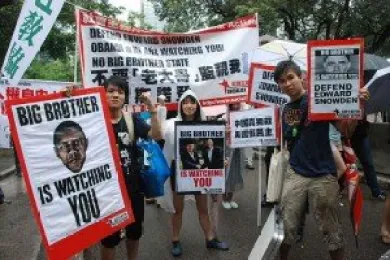
The Obama years also produced another controversy: the extraordinary expansion of the national-security state. Edward Snowden’s revelations forced Americans to confront the scale of government surveillance and the difficult constitutional questions surrounding national security. The American people understandably expect their government to protect the nation. Yet constitutional government also requires limits upon state power. Senator Rand Paul warned that government could exceed constitutional restraints and described such excesses as potentially constituting a form of tyranny. The underlying question therefore remains relevant beyond Obama: when does the protection of national security become a justification for powers that themselves threaten constitutional liberty?
The same principle applies internationally. A powerful state may possess the military capacity to intervene almost anywhere. That does not automatically mean that intervention produces stability. Power without restraint can become destructive at home. Power without foresight can become destructive abroad.
The final dimension of the Obama legacy concerns Russia. Relations between Washington and Moscow deteriorated sharply during his presidency, particularly after the Ukraine crisis and Russia’s annexation of Crimea in 2014. The United States increasingly viewed Russia through the prism of renewed strategic competition, while Moscow viewed NATO expansion and Western involvement in its surrounding geopolitical space as fundamental security threats. Again, the argument should not be reduced to a simplistic claim that one side alone created the confrontation. Russia made its own decisions. NATO made its own decisions. The United States made its own decisions. European governments made their own decisions. And smaller states made their own decisions.
But the consequence was unmistakable: the post-Cold War assumption that Russia and the West were destined for progressively deeper integration began to collapse. A new era of strategic confrontation emerged. The question for historians is not simply who was right or wrong at every individual stage, but whether the cumulative decisions of major powers created a strategic environment in which confrontation became increasingly difficult to prevent.
Barack Obama’s foreign-policy legacy is therefore far more complicated than either his supporters or his opponents sometimes acknowledge. He inherited wars. He ended some military commitments. He authorised military operations. He supported allies. He attempted diplomacy. He opposed certain forms of intervention. And yet, during his presidency, American power also contributed to a series of interventions and covert policies whose consequences proved considerably harder to control than their architects anticipated.
Libya remains divided. Yemen endured extraordinary humanitarian suffering. Syria became one of the great catastrophes of the modern Middle East. The Sahel experienced an expanding militant crisis. Iraq was destabilised further by the rise of ISIS. And relations between Washington and Moscow entered a much more dangerous period. None of this means that Obama personally created every subsequent catastrophe. History is rarely that simple. But history does demand accountability for consequences.
That is where the Arthur Zimmermann analogy becomes valuable. Zimmermann believed that Germany could exploit external forces to weaken its enemies. The revolutionary forces unleashed in Russia would eventually produce consequences far beyond German control. The Mexican proposal demonstrated another dimension of the same strategic mentality: move the crisis somewhere else, weaken the adversary, and hope the consequences remain manageable.
The lesson for the twenty-first century should therefore be obvious. Great powers can destroy governments much more easily than they can construct functioning states. They can arm factions much more easily than they can control them. They can open political doors much more easily than they can determine who walks through them. And they can create geopolitical earthquakes whose aftershocks continue for generations.
Perhaps, therefore, the most important question surrounding the Obama legacy is not whether his administration possessed the audacity of hope. It is whether America’s immense power was accompanied by sufficient audacity of foresight.
For Libya, Syria, Yemen, the Sahel and the wider Middle East, that question remains painfully unresolved.
https://moderntokyonews.com/category/america/ Past articles about AMERICA via MODERN TOKYO NEWS
MODERN TOKYO TIMES – MODERN TOKYO NEWS – please check https://moderntokyonews.com
Please check Modern Tokyo News at https://moderntokyonews.com for articles going back over 12 years. Sadly, Modern Tokyo Times got hacked and lost 14 years of articles…

Modern Tokyo News is part of the Modern Tokyo Times group
http://moderntokyotimes.com Modern Tokyo Times – International News and Japan News
http://sawakoart.com – Sawako Utsumi and her website – Modern Tokyo Times artist
https://moderntokyonews.com Modern Tokyo News – Tokyo News and International News
PLEASE JOIN ON FACEBOOK
http://facebook.com/moderntokyotimes