
Nepal and Day of Mourning after Flood Deaths: Many Still Missing (Tibet)
Kanako Mita, Sawako Utsumi, and Lee Jay Walker
Modern Tokyo Times
The government and people of Nepal — a nation overwhelmingly Hindu but also home to significant Buddhist and other religious communities — have observed a day of mourning following the devastating floods that struck the Himalayas after the collapse of a glacier.
It is known that more than 1,300 people have perished in Nepal and Tibet since this catastrophe occurred 13 days ago. At the same time, approximately 5,000 people remain unaccounted for. Henceforth, the death toll is likely to rise further as rescue teams continue their difficult search across some of the most challenging terrain on earth.
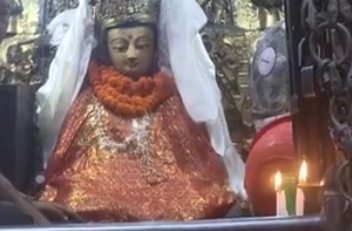
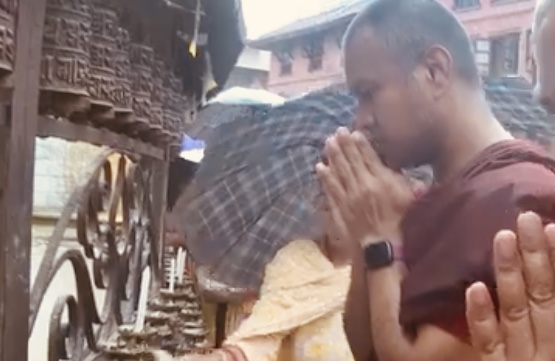
Government buildings lowered their flags, while people visited temples and other holy places to pray for the dead and missing — and for those who have survived but are now facing life without family members, friends and neighbors.
AP News reports: “In predominantly Hindu Nepal, mourning periods last 13 days, during which close family members stay home and relatives visit to pay their respects. Rituals are held on the final day to pray for the souls of the departed.”
The significance of this mourning tradition is profound. For many Nepalese families, the 13-day period represents a solemn passage of remembrance, prayer and spiritual reflection. In the aftermath of a catastrophe that has separated thousands of families from loved ones, such traditions provide a means of confronting grief while honoring those who have been lost.
Meanwhile, some people gathered in Kathmandu to urge the government to do more. Hundreds of workers were killed or remain missing after the powerful Bhotekoshi River struck hydropower facilities. Naturally, people in the areas hit hardest — particularly where so many remain missing — are demanding greater efforts from already overburdened rescue workers.
The BBC reported shortly after the tragedy: “Preliminary investigations have pointed to a collapsed glacier as the cause of the flash flood on the Nepal-Tibet border, highlighting the issue of rapidly melting Himalayan ice, scientists have told the BBC.”
According to the initial BBC reporting, the collapse generated what scientists believe was a magnitude 5.2 seismic event at the bottom of the valley, dramatically affecting the river’s flow and producing what could be described as a “collapsed dam like feeling.” Yet there was no conventional dam failure. Instead, an immense combination of ice, water, rock, debris and geological forces appears to have unleashed a devastating wall of water through the valleys.
Nature, when several destructive forces converge simultaneously, can become almost impossible to resist.
Kabita Dhungana, Deputy Mayor of Nuwakot in Nepal, immediately captured the human tragedy with heartbreaking simplicity: “Family members, children, parents are missing, and this is a very critical bad situation…Everything, basic needs are destroyed, so please help us. We are really in need of help.”
Sadly, even now, people continue calling for urgent assistance because of the enormous number of missing people and the lack of support in some of the hardest-hit areas.
The full magnitude of this disaster remains uncertain. Thousands are still missing, while mountainous terrain, destroyed infrastructure, disrupted communications and the continuing emergency make reliable assessments extremely difficult, even thirteen days after the catastrophe struck Nepal and Tibet. What is clear, however, is that this has already become a catastrophe of immense proportions, and international support remains desperately needed.
The Himalayan mountains have long symbolized permanence, strength and majesty. Yet this tragedy offers a sobering reminder that even these colossal landscapes remain subject to constant transformation. Ice can collapse. Rivers can change course. Mountains can shed enormous quantities of rock and ice. And when these forces converge, entire communities can be overwhelmed in the blink of an eye.
What is already known is devastating. More than 1,300 people have lost their lives, approximately 5,000 remain missing, villages have been devastated, infrastructure has been destroyed, and survivors are confronting the aftermath of a natural force that arrived with terrifying speed. Yet behind these numbers are mothers, fathers, children, relatives, friends, neighbors and entire communities whose lives have been irrevocably changed.
The Himalayan mountains remain majestic, but beneath their timeless presence lies a profound human sorrow.
Against this terrible backdrop, the government and people of Nepal have observed a national day of mourning. In a country where Hindu traditions are deeply woven into society, alongside its significant Buddhist heritage and other faith traditions, mourning carries profound spiritual meaning. Government buildings lowered their flags, while people gathered at temples and other holy places to pray for the departed, the missing and those left behind to face an uncertain future.
The timing is especially poignant. In Nepalese Hindu tradition, the mourning period traditionally extends for 13 days, culminating in rituals dedicated to the souls of those who have died. Thirteen days after the catastrophe, the nation therefore mourns not simply as a state, but as a society bound together by grief, faith and remembrance.
And so, as Nepal bows its head in mourning, the prayers are not only for those whose lives were taken by the Himalayan waters. They are also for the thousands who remain missing, for families still waiting for answers, for rescue workers continuing their exhausting efforts, and for survivors who must somehow rebuild their lives amid devastation.
On this day of mourning, Nepal remembers its dead, searches for its missing, and stands with those who survived — carrying grief today while hoping that, eventually, from such immense loss, the first fragile signs of renewal may emerge.
https://moderntokyonews.com/category/asia/ Past ASIA articles via MODERN TOKYO NEWS
MODERN TOKYO TIMES – MODERN TOKYO NEWS – please check https://moderntokyonews.com
Please check Modern Tokyo News at https://moderntokyonews.com for articles going back over 12 years. Sadly, Modern Tokyo Times got hacked and lost 14 years of articles…

Modern Tokyo News is part of the Modern Tokyo Times group
http://moderntokyotimes.com Modern Tokyo Times – International News and Japan News
http://sawakoart.com – Sawako Utsumi’s website and Modern Tokyo Times artist
https://moderntokyonews.com Modern Tokyo News – Tokyo News and International News
PLEASE JOIN ON FACEBOOK http://facebook.com/moderntokyotimes