
Japanese Art – Delightful Mix
Lee Jay Walker
Modern Tokyo Times
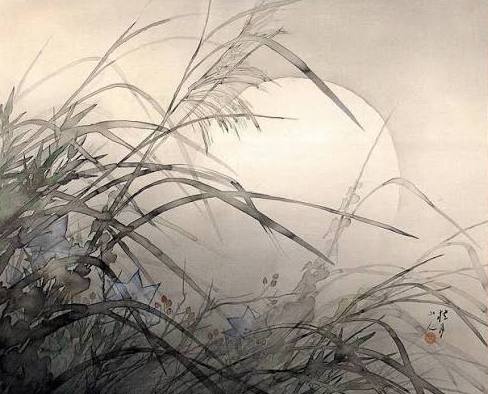
Matsubayashi Keigetsu (1876–1963) stands as a serene guardian of tradition, a contemplative spirit whose art unfolds gently against the restless tides of modernity. Through his brush, Nanga—the literati tradition deeply influenced by Chinese poetry, philosophy, and painting—becomes more than an inherited artistic language. It transforms into a breathing universe, where mountains rise beyond the boundaries of the visible world, mist drifts like an unspoken prayer, and distant moons awaken memories of places untouched by time. Each brushstroke carries a quiet rhythm, blending decorative harmony with spiritual reflection. His paintings invite the viewer not simply to observe nature, but to enter its silence.
During the Meiji and Taishō eras, as Japan encountered the powerful currents of Western artistic thought, many painters embraced oil painting, realism, and new aesthetic principles. Keigetsu, however, continued to explore the ink-rich pathways of the past, preserving the cultural dialogue that had flowed between China and Japan for centuries. His devotion to classical aesthetics was not merely an act of nostalgia or resistance to change. Rather, it represented continuity—a living conversation between generations, artistic traditions, and the enduring imagination of the literati. Through his work, mountains, rivers, empty spaces, and wandering brushstrokes retain their capacity to express the profound beauty of stillness.
The Japanese artist Nishimura Shigenaga (1697–1756) pursued his artistic calling with a quiet and determined devotion. Before his name became associated with the evolving world of ukiyo-e, he worked as a bookseller in the Kanda area of Edo, present-day Tokyo. Surrounded by books, printed images, and the intellectual currents of his time, he cultivated his artistic vision through self-directed study. Within the modest surroundings of his daily life, the eye of the future artist gradually awakened to the subtleties of line, proportion, expression, and narrative.
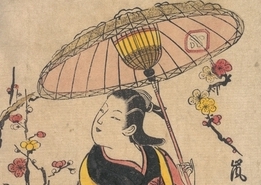
The bookshop became more than a place of commerce. It offered an environment in which printed culture and artistic curiosity could meet. As Shigenaga’s reputation developed, the influence of artists such as Okumura Masanobu and Nishikawa Sukenobu helped shape his evolving approach. Their artistic presence entered his work through the refinement of composition, the elegance of human figures, and a growing sensitivity to the visual language of ukiyo-e. Yet Shigenaga’s journey also speaks to the importance of perseverance: an artist nurturing his talent through observation, study, and an enduring relationship with the printed image.
In this manner, art emerged not solely from formal instruction, but from the patient cultivation of an attentive eye. The pages of books, the rhythm of everyday life, and the cultural atmosphere of Edo all contributed to a creative vision that would find its place within Japan’s rich history of woodblock printing.
The Japanese artist Nishimura Goun (1877–1938) was born during the early Meiji Period, an era in which Japan experienced profound transformations in society, culture, and artistic expression. Amid the encounter between inherited traditions and modern influences, Goun continued to explore the delicate beauty of nature (last two art pieces by Goun). His three exquisite depictions of birds reveal an artistic sensibility attentive to the smallest movements of the living world, where a feather, a curved beak, or the quiet positioning of a wing becomes an opportunity for contemplation.
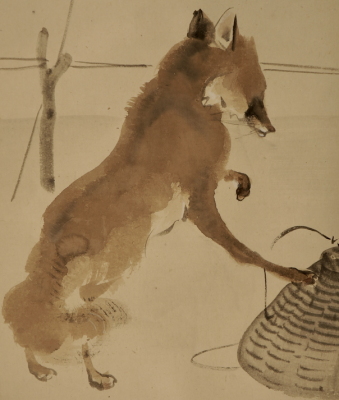
Born in Kyoto, the ancient capital of Japanese culture, Goun inherited an artistic environment shaped by centuries of religious, literary, and aesthetic traditions. From the cultural legacies of Nara to the refined artistic worlds of Kyoto, nature had long occupied a central place in Japanese expression. Birds, flowers, trees, and changing seasons were never merely decorative subjects. They could embody transience, renewal, spiritual associations, and the subtle beauty of imperfection.
This cultural inheritance resonates through Goun’s bird paintings. His subjects appear poised between movement and stillness, their delicate forms revealing the discipline of traditional brushwork. Each bird possesses an individual presence, while the surrounding space allows the imagination to wander beyond the boundaries of the image. The paintings become intimate encounters between artistic precision and the quiet unpredictability of nature.
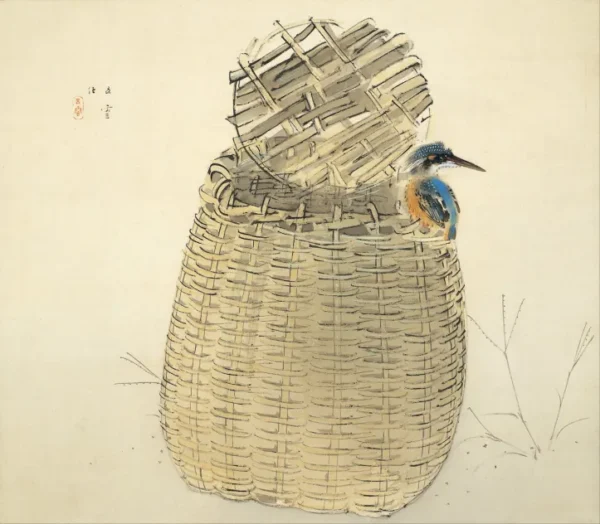
In Goun’s hands, the bird becomes more than a representation of the natural world. It becomes a messenger of seasonal change, a symbol of grace, and a reminder that beauty often resides in fleeting moments. The present and the past meet within the delicate movement of the brush, while the enduring spirit of Japanese art continues to breathe through every carefully considered line.
https://moderntokyonews.com/?s=Art Past ART articles via MODERN TOKYO NEWS (Modern Tokyo Times group)
MODERN TOKYO TIMES – MODERN TOKYO NEWS – please check https://moderntokyonews.com
Please check Modern Tokyo News at https://moderntokyonews.com for articles going back over 12 years. Sadly, Modern Tokyo Times got hacked and lost 14 years of articles…

Modern Tokyo News is part of the Modern Tokyo Times group
http://moderntokyotimes.com Modern Tokyo Times – International News and Japan News
http://sawakoart.com – Sawako Utsumi’s website and Modern Tokyo Times artist
https://moderntokyonews.com Modern Tokyo News – Tokyo News and International News
PLEASE JOIN ON FACEBOOK
https://www.facebook.com/moderntokyotimes