Deng Xiaoping Opposed Power Concentration (Xi Jinping)
Lee Jay Walker
Modern Tokyo Times
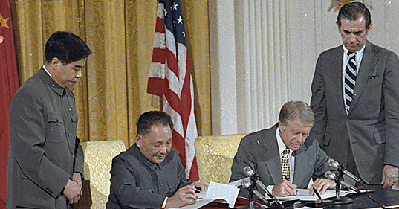
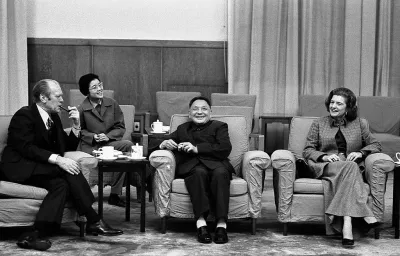
The economic transformation of China is inseparable from the legacy of Deng Xiaoping (1904–1997). Unlike many revolutionary leaders who sought perpetual dominance, Deng understood the dangers of excessive political centralization. His vision for the Chinese Communist Party (CCP) rested on pragmatism, collective leadership, economic dynamism, and institutional renewal. Above all, Deng feared the return of one-man rule and the suffocating political culture that had previously engulfed China.
Deng repeatedly warned against the emergence of an all-encompassing ruler capable of monopolizing authority and surrounding himself with loyalists. He believed that excessive concentration of power would inevitably create a detached ruling elite within the CCP, weaken innovation, foster fear-driven governance, and ultimately endanger the long-term stability of China itself.
Hence, while Deng ruthlessly crushed the protests surrounding 1989 Tiananmen Square protests and massacre, his actions were rooted in a harsh political calculation: namely, that only the CCP possessed the capacity to preserve Chinese unity and continue lifting hundreds of millions out of poverty. Deng feared that political fragmentation, social upheaval, separatist tendencies, and external interference could shatter China during a vulnerable stage of modernization. For this reason, Deng simultaneously supported strict political control while also promoting safeguards — including leadership term limits and collective governance — designed to prevent another cult of personality from emerging.
However, many of Deng’s core political concerns appear increasingly abandoned under the leadership of Xi Jinping. France 24 reported several years ago: “Xi Jinping secured a historic third term as China’s leader on Sunday and promoted some of his closest Communist Party allies, cementing his position as the nation’s most powerful leader since Mao Zedong.”
Xi himself declared: “I wish to thank the whole party sincerely for the trust you have placed in us.”
Yet this consolidation of authority stands in stark contrast to Deng’s political philosophy. Deng understood that national rejuvenation required renewal within the CCP itself — fresh leadership, competing viewpoints within party structures, and restraints on personal power. Xi’s increasing reliance on loyalists and ideological conformity risks producing precisely the rigid political environment Deng sought to avoid.
Deng famously warned: “It is not good to have an over-concentration of power.”
He also issued an even more prophetic warning: “China is not a superpower, nor will she ever seek to be one… If one day China should change her color and turn into a superpower, if she too should play the tyrant in the world, and everywhere subject others to her bullying, aggression and exploitation, the people of the world should identify her as social-imperialist, expose it, oppose it and work together with the Chinese people to overthrow it.”
These words reflected Deng’s deep suspicion of unchecked authority — not merely domestically, but internationally. He feared ideological rigidity, political arrogance, and the emergence of a leadership class insulated from criticism and accountability.
Economic openness initiated under Deng is also increasingly being overshadowed by the expanding reach of the state apparatus. The Guardian noted: “Businesses that fuelled China’s extraordinary three decades of growth, from tech giants to tutoring companies, have in recent years found the party demanding either a stake or more oversight, installing officials and demanding party cells be set up.”
Likewise, Neil Thomas, a senior China analyst at Eurasia Group, told the BBC: “At least 24 of the 31 provincial-level party secretaries are political associates of Xi, having previously known his family, studied with him, worked under him, or worked for one of his close allies.”
To many observers inside and outside China, these developments represent not confidence, but insecurity — a leadership increasingly dependent on centralized authority, ideological discipline, surveillance mechanisms, and personal loyalty. Deng, by contrast, recognized that excessive concentration of power eventually corrodes political vitality and institutional resilience.
This does not mean Xi’s concerns are entirely unfounded. Unlike Deng’s era, modern China faces aggressive containment measures from the United States related to Taiwan, trade restrictions, sanctions, technological competition, military encirclement, and strategic rivalry across Asia.
Xi argues that hostile external forces seek to obstruct China’s rise and weaken its geopolitical influence in Central Asia, Northeast Asia, the Mekong region, and the South China Sea. Furthermore, governments aligned closely with Washington — including those in Japan and Australia — have adopted increasingly confrontational postures toward Beijing.
Yet these external pressures also strengthen Xi’s justification for deeper political control at home. National security narratives, anti-foreign rhetoric, and technological surveillance are increasingly utilized to reinforce centralized authority within the CCP. Many Chinese citizens therefore worry that the economic and social gains achieved during the Deng era could gradually be constrained by tightening political orthodoxy and expanding state intrusion.
The shadow of Mao Zedong still lingers over China — even though the country itself has been transformed beyond recognition since the Maoist era. Modern China is wealthier, technologically advanced, globally interconnected, and vastly more sophisticated than during Mao’s rule. Yet Deng’s greatest political lesson remains profoundly relevant: when too much power becomes concentrated in the hands of one leader, institutional balance weakens, fear replaces flexibility, and the long-term stability of the nation itself can gradually come under threat.
MODERN TOKYO TIMES – MODERN TOKYO NEWS – please check https://moderntokyonews.com
Please check Modern Tokyo News at https://moderntokyonews.com for articles going back over 10 years. Sadly, Modern Tokyo Times got hacked and lost 14 years of articles…

Modern Tokyo News is part of the Modern Tokyo Times group
http://moderntokyotimes.com Modern Tokyo Times – International News and Japan News
http://sawakoart.com – Sawako Utsumi’s website and Modern Tokyo Times artist
https://moderntokyonews.com Modern Tokyo News – Tokyo News and International News
PLEASE JOIN ON TWITTER
https://twitter.com/MTT_News Modern Tokyo Times
PLEASE JOIN ON FACEBOOK