Japanese Novelist and Ashihei Hino: A Life of Political Extremes
Lee Jay Walker
Modern Tokyo Times
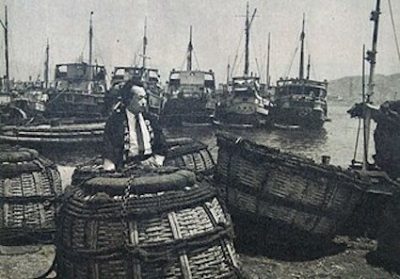
The Japanese novelist Ashihei Hino was not merely shaped by his era—he was consumed by it. In his youth he leaned left, drawn to ideals of justice and reform. But as Japan marched toward militarism, he was swept into its ranks, transforming into a writer who humanized empire even as he served it.
After 1945, the very elites who had championed militarism now scrambled to appease America—and Hino, once celebrated, became a political liability. For many ordinary Japanese soldiers, coerced into a war of elite making, this post-war reversal was yet another betrayal.
For the post-war generations—untouched by Soviet terror, Nazi annihilation, Western and Islamic colonial brutality—the world Hino inhabited is often flattened into moral clichés. Yet history is heavier than slogans. Slavery still existed in Mecca until the early 1960s. Empires carved up continents with impunity. Against this global violence, the Meiji rulers chose ruthlessly: modernize or be devoured. Japan entered the “empire club” not from romantic ambition but from fear—knowing full well what had already happened to Africa, Southeast Asia, and a collapsing China.
Hino lived inside this logic. His journey from leftist sympathizer to imperial soldier mirrored the trajectory of millions caught in the slipstream of global power. Serving in the Imperial Army in China and later in the information corps, he became both participant and chronicler of Japan’s collision with history.
His works Fun’nyōtan and Mugi to Heitai exploded in popularity—Mugi to Heitai alone selling over a million copies—offering intimate portraits of common soldiers. These depictions softened the image of the Japanese army, a form of cultural persuasion the authorities valued deeply.
Despite sensing the coming storm, Hino wrote with unwavering conviction: “My heart’s belief in the greatness of the Japanese soldier remains unchanged… those who rest eternally should be the spiritual foundation of the Japanese people.”
The bitter irony was clear to him: militarists purged leftists; post-war democrats purged nationalists; occupiers purged both. Every ideology promised liberation; every victor erased its opponents. Hino saw the pattern—and he knew its cost.
He ended his life at 53. In Hana to Ryuu and Kakumei Zengo, he sought a final refuge in introspection, but the “vague anxiety” he cited—echoing Akutagawa—was surely intensified by the new Japan built under American oversight. He belonged to a past now forbidden, a world condemned even by those who once commanded it.
Ashihei Hino was, ultimately, a casualty of forces that allowed no neutrality and tolerated no mistakes. He was a man carried along by the tides of empire and occupation, loyalty and punishment, idealism and despair. His Wheat and Soldiers remains one of the few works to reveal the war as seen by the ordinary man—a man engulfed, used, and finally discarded by history’s machinery.

Modern Tokyo News is part of the Modern Tokyo Times group
http://moderntokyotimes.com Modern Tokyo Times – International News and Japan News
http://sawakoart.com – Sawako Utsumi’s website and Modern Tokyo Times artist
https://moderntokyonews.com Modern Tokyo News – Tokyo News and International News
PLEASE JOIN ON TWITTER
https://twitter.com/MTT_News Modern Tokyo Times
PLEASE JOIN ON FACEBOOK