
Sudan and Malnutrition (MSF Scandal)
Murad Makhmudov, Noriko Watanabe, and Lee Jay Walker
Modern Tokyo Times
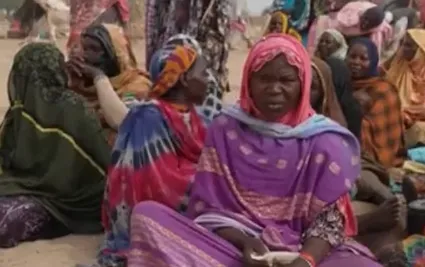
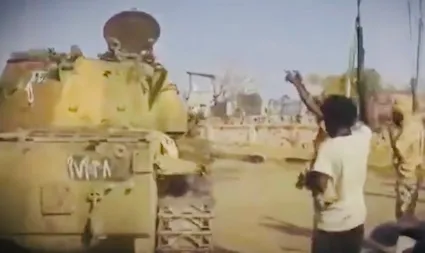
In Greater Darfur and Greater Kordofan in Sudan, entire regions now hover on the edge of famine. Remote rural communities are cut off from aid, displacement camps are buckling under impossible strain, and new famine hotspots have emerged in East Darfur and South Kordofan. Places such as Um Baru and Kernoi have already crossed newly reported famine thresholds. Communities living on the margins are now collapsing altogether.
A previous UN fact-finding mission into atrocities and human rights violations, the expert Mona Rishwami concluded that both the RSF and the SAF have committed grave abuses against civilians on a huge scale. Meanwhile, millions now face acute food insecurity, with the worst-case trajectory pointing toward mass starvation.
In Darfur, massacres targeting non-Arab communities continue with terrifying regularity. Across the country, executions of captured fighters persist, while drone strikes and shelling repeatedly hit food convoys, hospitals, markets, mosques, and schools. Hence, these are among the darkest days in Sudan’s modern history – this says something given its brutal past (including Arab Muslims enslaving the African Dinka and others).
UN News warns: “Across the country, nearly 4.2 million cases of acute malnutrition are now expected in 2026, including more than 800,000 cases of severe acute malnutrition, representing a sharp increase from 2025 levels, according to IPC projections.”
UN News continues: “Atrocities in Sudan’s Darfur region are spreading from town to town in an organized campaign of violence that includes mass executions, rape and ethnic targeting, amounting to war crimes and crimes against humanity, the prosecutor of the International Criminal Court told the UN Security Council on Monday.”
Adding to this tragedy are allegations that some humanitarian workers and contractors have exploited vulnerable refugees and displaced people.
The BBC reports: “Medical charity Doctors Without Borders (MSF) admits some staff members and external contractors were the subjects of 59 allegations of misconduct, including sexual harassment, exploitation and abuse, in relation to Sudanese refugees who had fled the civil war in search of safety.”
The BBC further notes: “Young girls were exploited in some cases, and often food or jobs were offered in exchange for sex, but an MSF investigation could not verify all 59 allegations.”
These allegations are particularly disturbing because humanitarian assistance exists to protect those fleeing violence, hunger, and persecution. When aid workers or contractors exploit vulnerable people for sexual favours, money, or other forms of coercion, it represents a profound betrayal of trust and undermines confidence in relief efforts.
Sadly, such allegations are not unique to Sudan. Similar accusations have surfaced in humanitarian crises from Haiti to Africa and beyond, involving various organizations and individuals entrusted with helping vulnerable populations. While the vast majority of humanitarian workers serve with integrity and courage under extremely difficult conditions, repeated scandals demonstrate the need for stronger oversight, greater transparency, and robust accountability mechanisms.
Those fleeing war, famine, and displacement should never face the additional threat of exploitation from those tasked with providing assistance. Humanitarian aid must remain a source of protection and dignity—not another avenue for abuse.
Turning back to the conflict itself, Darfur first burned itself into the world’s conscience during the 2003–2005 conflict, when Arab militias carried out campaigns of ethnic cleansing against Black African communities—including the Fur, Masalit, and Zaghawa — leaving hundreds of thousands dead. Today, history is not merely echoing; it is repeating itself. Since the outbreak of the current war, ethnically driven attacks have returned with chilling precision.
Catherine Russell, Executive Director of UNICEF, issued one of the most harrowing warnings of the conflict: “Children as young as one being raped by armed men should shock anyone to their core and compel immediate action… Sexual violence is being used as a tactic of war. This is an abhorrent violation of international law and could constitute a war crime. It must stop.”
Sudan’s past offers a grim warning. After decades of war marked by mass killings, slave raids, and systematic violence against non-Arab populations, South Sudan ultimately broke away. Today, Sudan again risks disintegration — sliding toward de facto partition, not unlike Libya, even if its borders remain formally intact.
It is incumbent upon regional powers, Gulf states, African nations, and the wider international community to pursue meaningful negotiations, protect humanitarian access, and support mechanisms of accountability. Without a sustained and enforceable peace, Sudan’s descent will continue — defined by ethnic massacres, starvation, sexual violence, and the destruction of entire communities.
Sudan cannot survive endless fragmentation. The price of inaction is already being paid in children’s graves, emptied villages, shattered families, and a nation pushed relentlessly toward the abyss.
The country must break free from this cycle of war, impunity, and collapse. Yet today, millions of ordinary Sudanese remain trapped in the convulsions of conflict — displaced, starving, and unheard—standing at the very edge of catastrophe. Their suffering demands not indifference, but urgent and sustained international attention.
https://moderntokyonews.com/?s=Sudan Past SUDAN articles via MODERN TOKYO NEWS
MODERN TOKYO TIMES – MODERN TOKYO NEWS – please check https://moderntokyonews.com
Please check Modern Tokyo News at https://moderntokyonews.com for articles going back over 12 years. Sadly, Modern Tokyo Times got hacked and lost 14 years of articles…

Modern Tokyo News is part of the Modern Tokyo Times group
http://moderntokyotimes.com Modern Tokyo Times – International News and Japan News
http://sawakoart.com – Sawako Utsumi and her website – Modern Tokyo Times artist
https://moderntokyonews.com Modern Tokyo News – Tokyo News and International News
PLEASE JOIN ON TWITTER
https://twitter.com/MTT_News Modern Tokyo Times
PLEASE JOIN ON FACEBOOK
http://facebook.com/moderntokyotimes