Japanese Art and Sumio Kawakami (Early Sorrow to Militarism)
Lee Jay Walker
Modern Tokyo Times
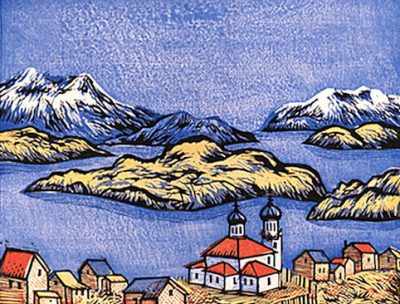
The Japanese artist Sumio Kawakami (1895–1972) was born in the vibrant port city of Yokohama. During his formative years he studied drawing under Shodai Tameshige (1863–1951) while attending Aoyama Junior High School in Tokyo. These early lessons nurtured his sensitivity to line and composition, laying the foundations for the distinctive artistic path he would later pursue.
Yet Kawakami’s youth was marked by deep personal sorrow. In 1915 his mother passed away, a loss that left a lasting emotional imprint. A few years later he travelled abroad, spending roughly a year in the United States and Canada. When he returned to Japan in 1918 after undertaking various forms of work, another tragedy awaited him: his brother was gravely ill and would soon die. These experiences of loss and displacement quietly shaped the introspective character that would emerge in his art.
Kawakami often described himself as self-taught in the realm of sōsaku hanga—the “creative prints” movement that emphasized the artist’s personal control over design, carving, and printing. Nevertheless, he benefited from attending workshops led by Goda Kiyoshi (1862–1938), whose guidance offered valuable technical insights and broadened Kawakami’s understanding of printmaking.
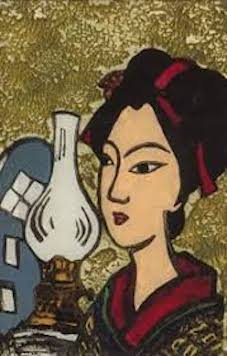
The writer and collector Oliver Hadley Statler (1915–2002) later quoted Kawakami reflecting on his artistic independence: “Since I didn’t live in Tokyo I never knew many of the print artists and never was much influenced by them. I’ve just gone my own way, doing what interested me, and hoping it would interest somebody else. If it has, I’m happy.”
This quiet independence defined Kawakami’s artistic spirit. Living outside the dominant artistic circles allowed him to cultivate a style shaped less by fashion and more by personal reflection.
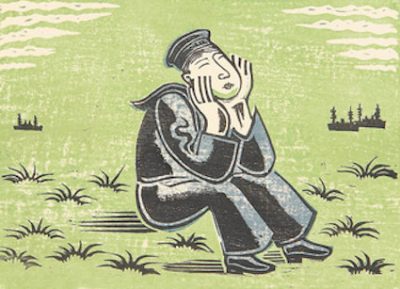
Kawakami was also openly anti-militarist during a time when fervent nationalism swept across Japan. The contemplative sailor depicted in his print from the late 1920s may subtly mirror the artist’s own inner world—thoughtful, uneasy, and distant from the rising tide of militaristic fervor.
The pressures of wartime Japan eventually touched his personal life as well. Kawakami lost his position as an English teacher (Japanese government banned the teaching of English during the wartime years). Yet even amid this climate of conformity and ideological pressure, he remained steadfast in his belief that militarism was profoundly wrong. His quiet defiance, much like his art, reflected a deeply individual conscience that refused to be carried away by the currents of the age.

Modern Tokyo News is part of the Modern Tokyo Times group
http://moderntokyotimes.com Modern Tokyo Times – International News and Japan News
http://sawakoart.com – Sawako Utsumi and her website – Modern Tokyo Times artist
https://moderntokyonews.com Modern Tokyo News – Tokyo News and International News
PLEASE JOIN ON TWITTER
https://twitter.com/MTT_News Modern Tokyo Times
PLEASE JOIN ON FACEBOOK